Tobii Pro SDK — free, included
For your own experiments and applications. Provides access to the gaze point, 3D eye position, pupil diameter and eye images. Each sample has two timestamps — from the eye tracker and from the computer.
Field test instruments and fusion splicers for network installers and operators.
102 products in this department
Browse the departmentLaboratory instrumentation for photonics, laser technology and R&D.
224 products in this department
Browse the departmentFiber-optic sensing systems: DAS, DTS, DSS, FBG and OFDR.
80 products in this department
Browse the departmentEye tracking, fNIRS, EEG and biometrics for science and business.
53 products in this department
Browse the departmentHome » Products » Research & Scientific Instruments » Eye Tracking » Tobii Pro Spectrum
A device mounted below the monitor that tracks the participant’s eyes with cameras and records — up to 1,200 times per second — where they look on the screen, how the eye moves and how the pupil changes. For laboratories that study not only what we look at, but also how fast and how precisely the eye works.
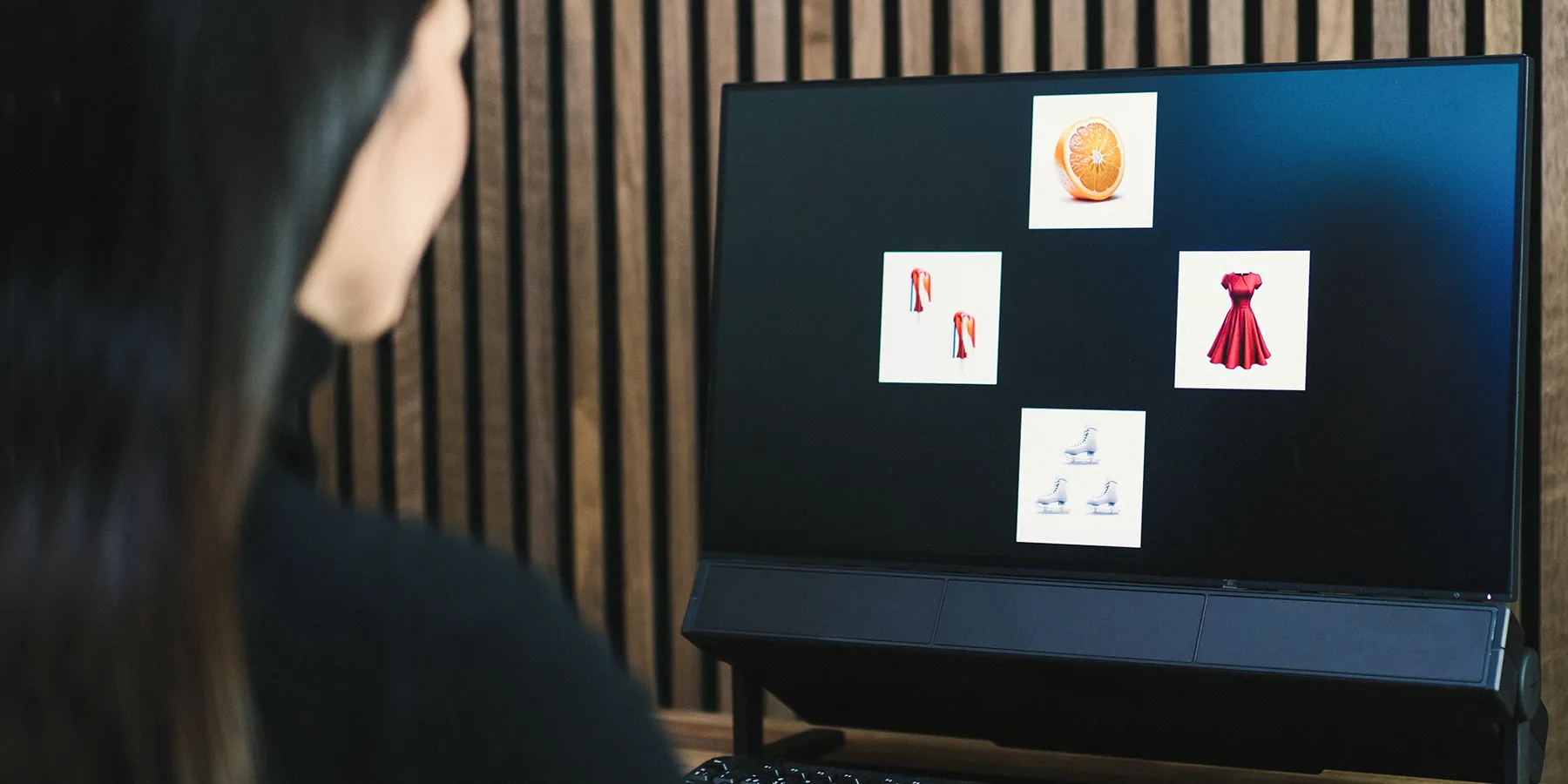
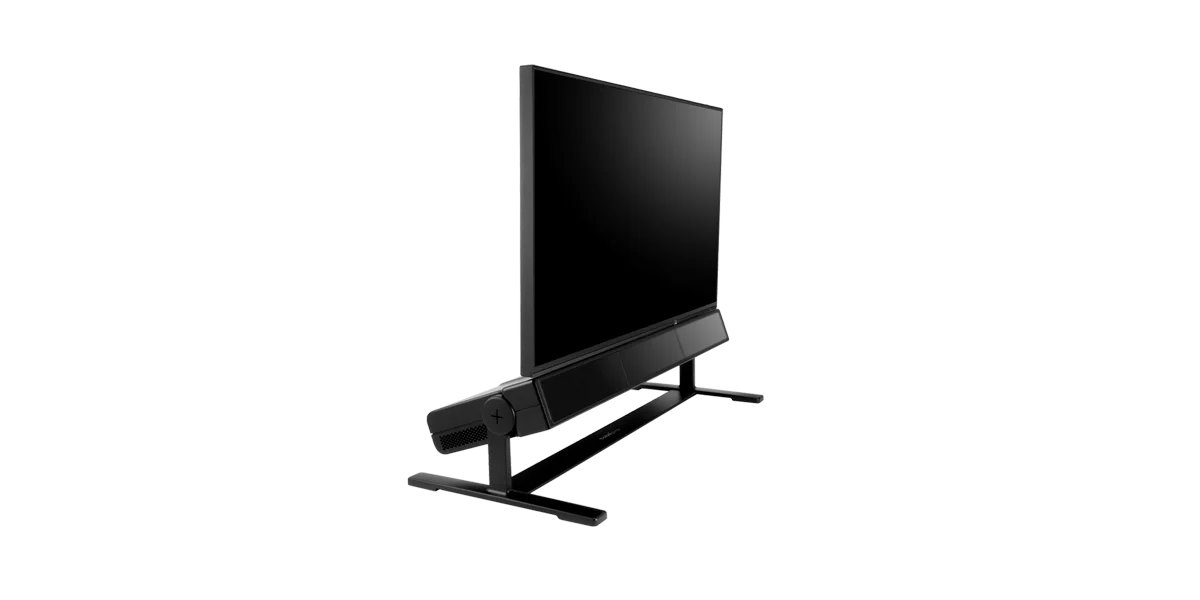
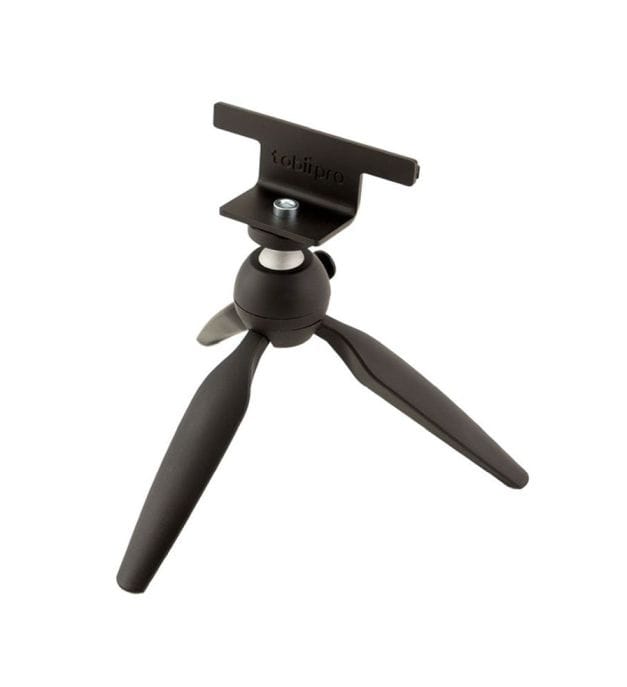
Spectrum is a stationary laboratory eye tracker. The package includes the eye tracker unit mounted below the monitor on which you present stimuli — images, text or video. The participant sits in front of the screen, and the eye tracker measures where and how they look. A single Ethernet cable runs to the computer with the software.
eye tracker unit · EIZO 23.8″ monitor · 24 V power supply and Ethernet cable · quick start guide · Tobii Pro SDK and Eye Tracker Manager licenses
You will also needa computer running Windows, macOS or Linux; for studies without programming — a Tobii Pro Lab license (sold separately)
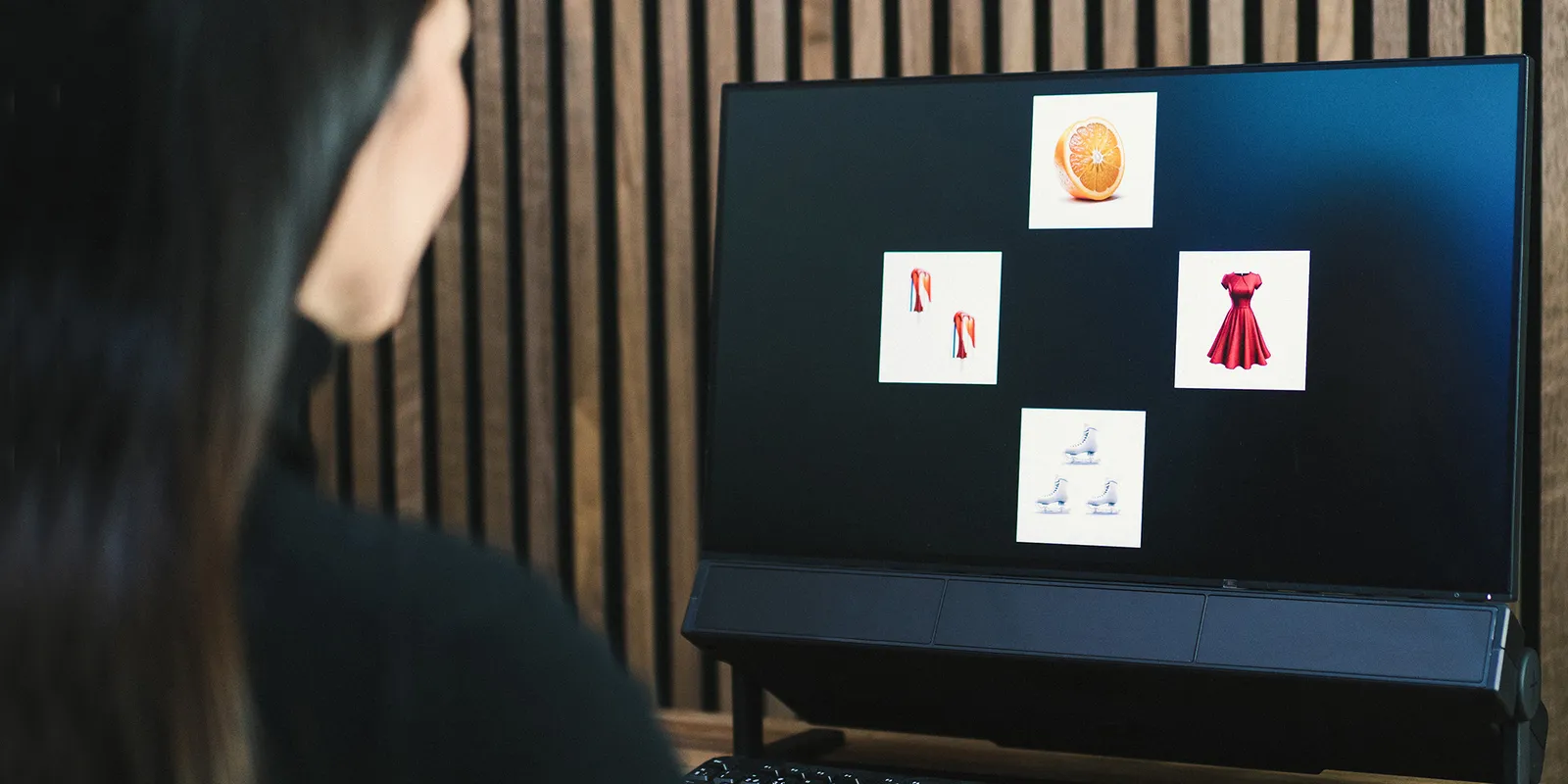
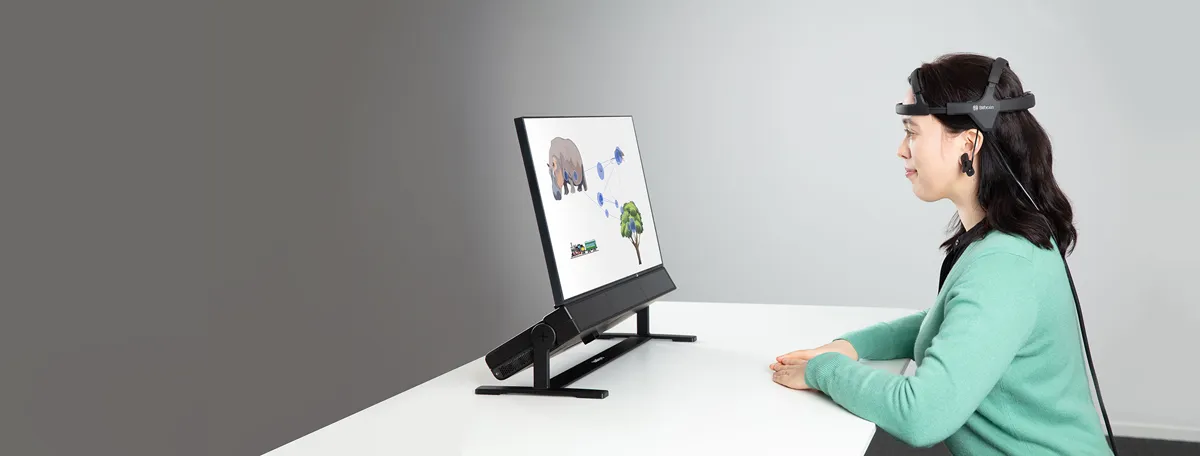
An eye tracker is a device that measures eye movements. Spectrum sits below the monitor: the participant views images, text or video, and the device records which point on the screen they are looking at at every moment and how their eye moves.
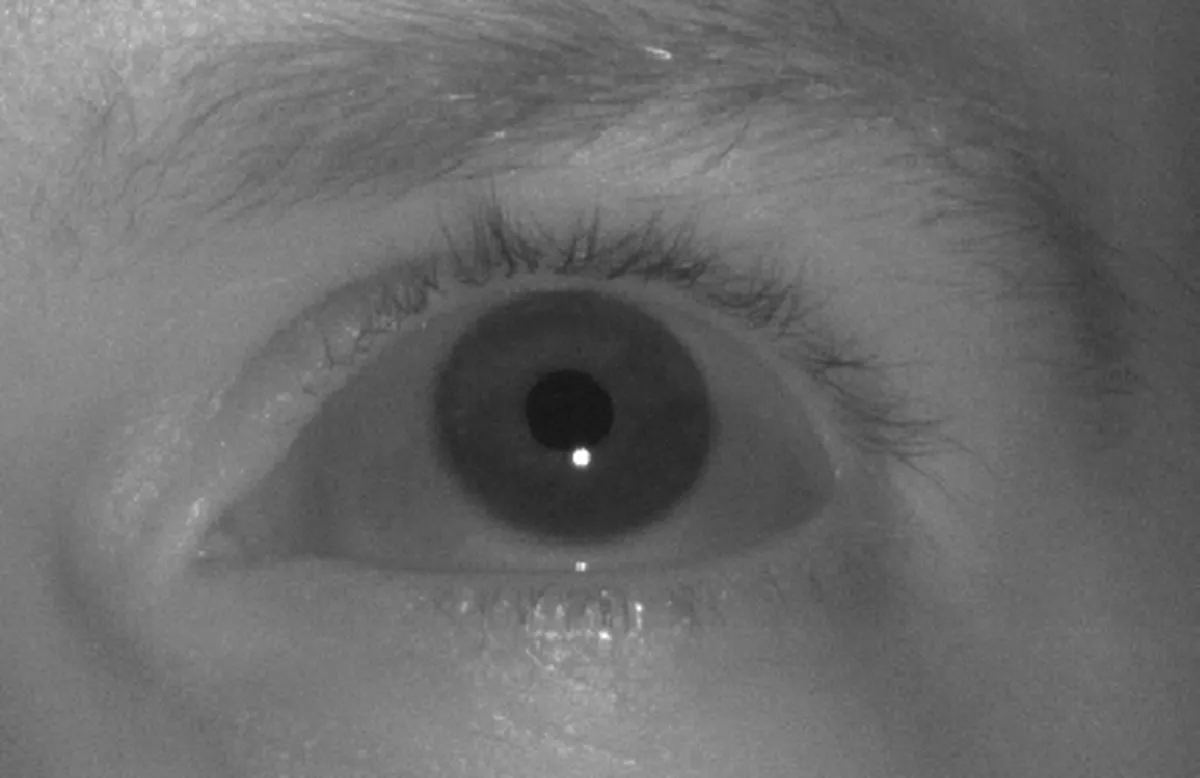
Each eye image becomes one row of data. At 1200 Hz, 1,200 such rows are produced per second — here we show them in slow motion.
Illustrative values generated in the browser — not a recording from the device. Yellow gaze point: the eye is in a saccade. From such rows the software identifies fixations and saccades.
Eye image: Tobii; method description based on the manufacturer’s article “How do eye trackers work?”. Data content: Tobii Pro Spectrum specifications.
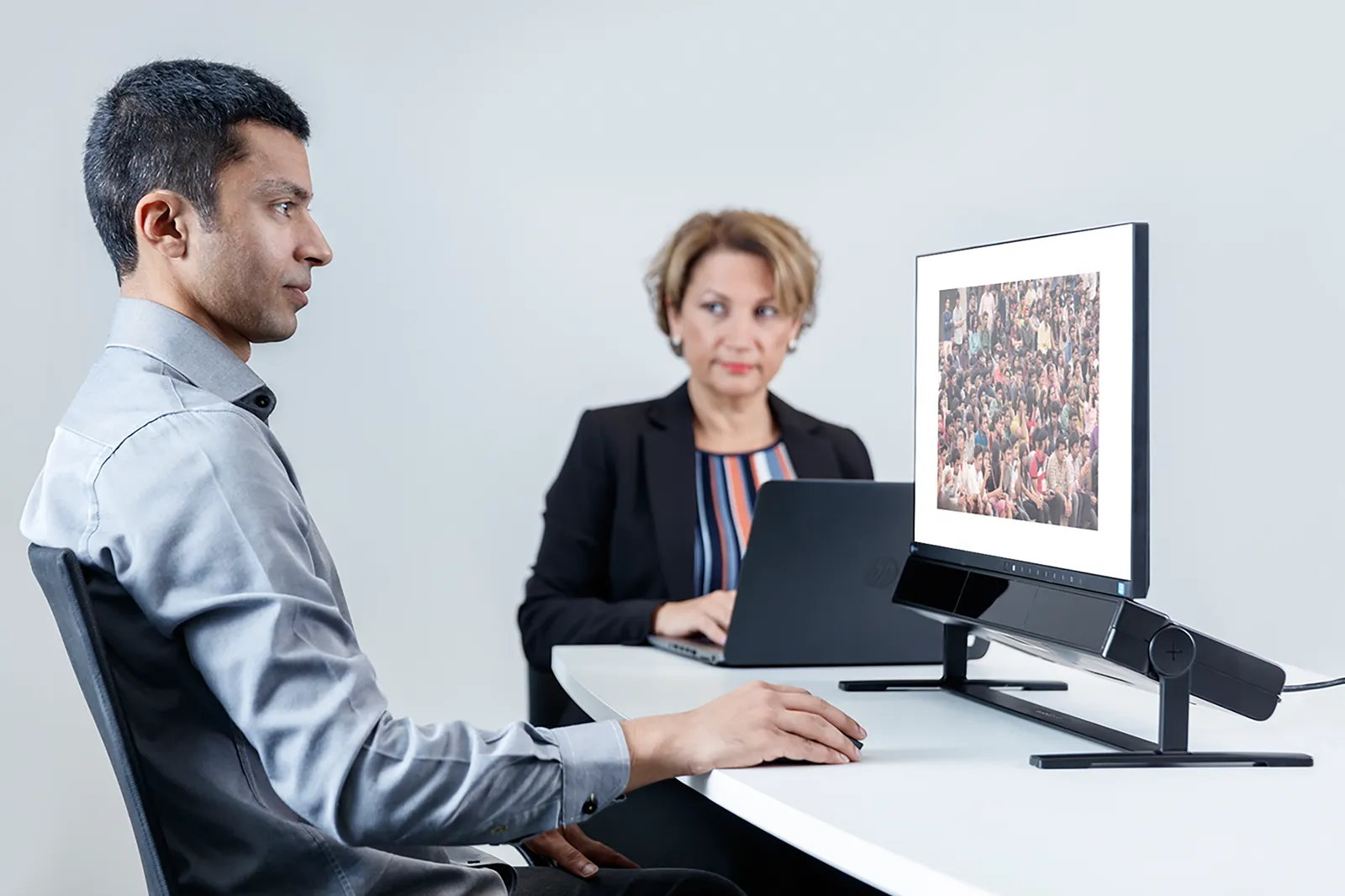
Two synchronized cameras see each eye from two sides, and a 3D eye model calculates gaze, pupil diameter and the eye’s position in space. In many research paradigms a chinrest is not needed.
The box and camera rays on the photo are illustrative — not to scale.
The camera images are processed in the eye tracker itself — ready-to-use gaze data reaches the computer over a single Ethernet cable. Average latency below 2 ms lets you change the stimulus depending on where the participant is looking (gaze-contingent paradigms).
The gaze-following window on the photo illustrates a gaze-contingent paradigm. According to the manufacturer, the latency value requires firmware 2.2.3 and Tobii Pro SDK 1.9 or later.
The eye tracker delivers the data, and the software turns it into results. Tobii Pro Lab guides you through every stage of a study: design, recording, visualization and metrics. The eye tracker and the software come from the same manufacturer. If you prefer to write your own experiments, use the free Tobii Pro SDK.
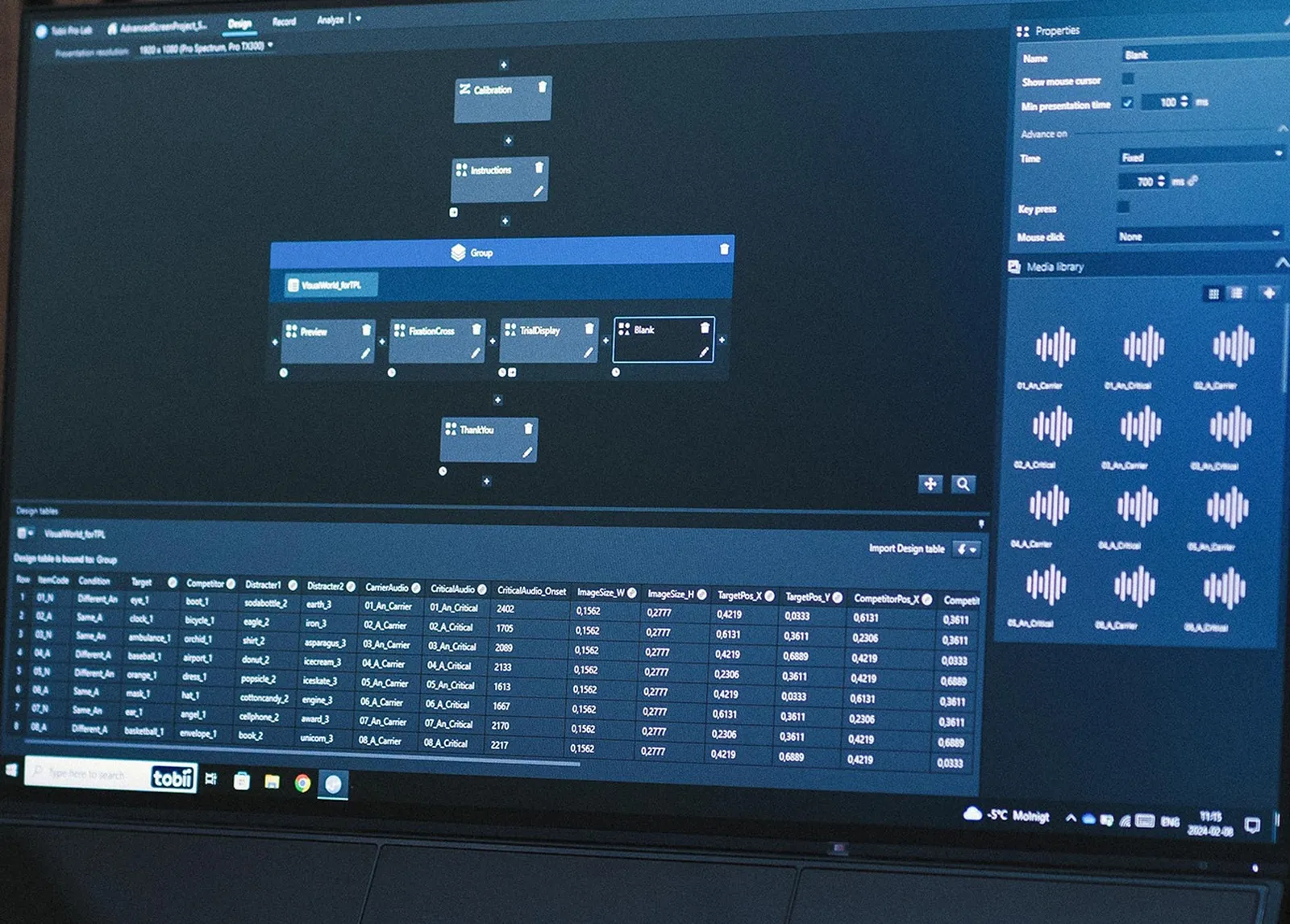
Set stimuli, order and conditions in the Design module.
Pro Lab controls the eye tracker and stimulus presentation in one application.
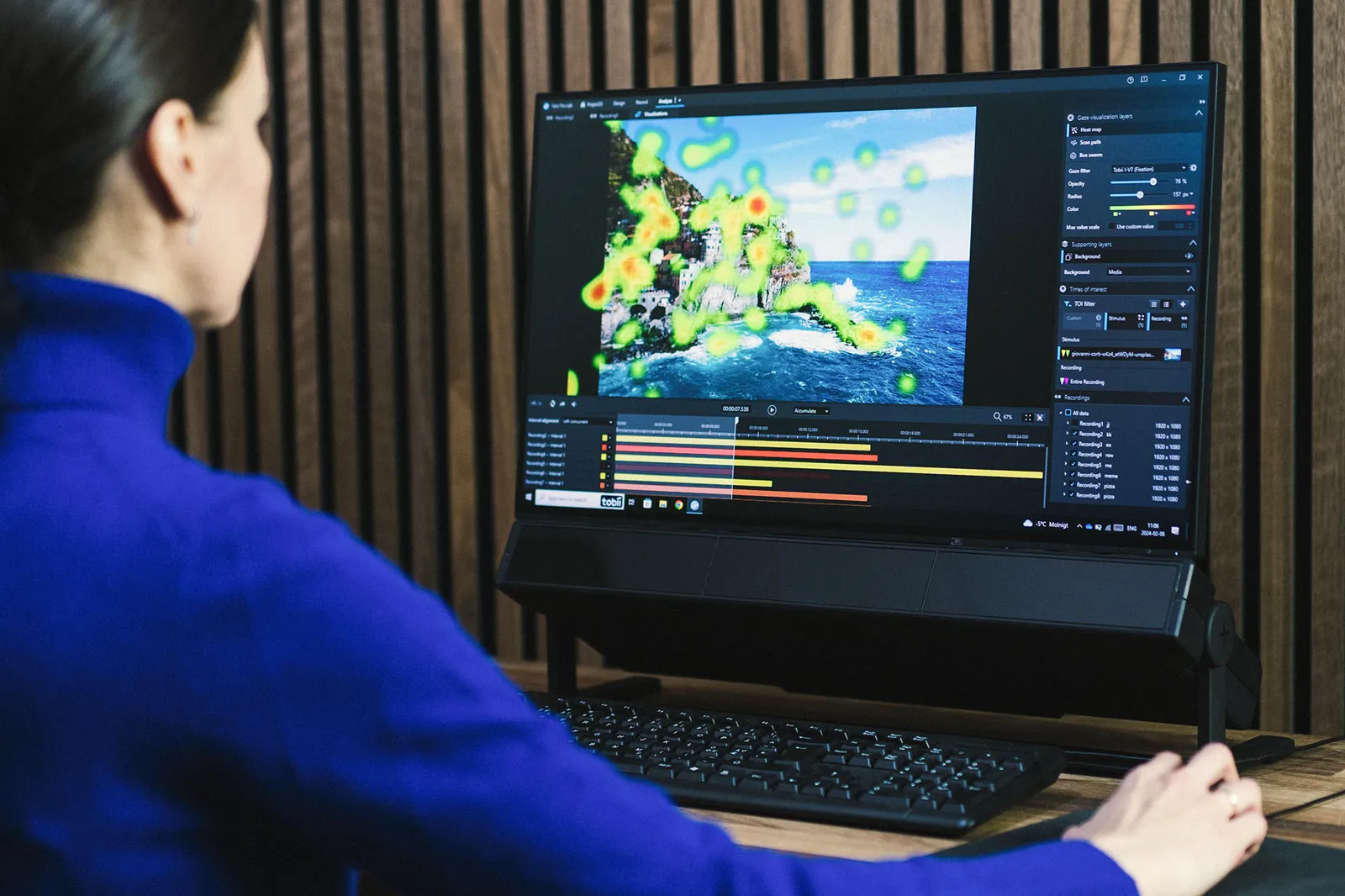
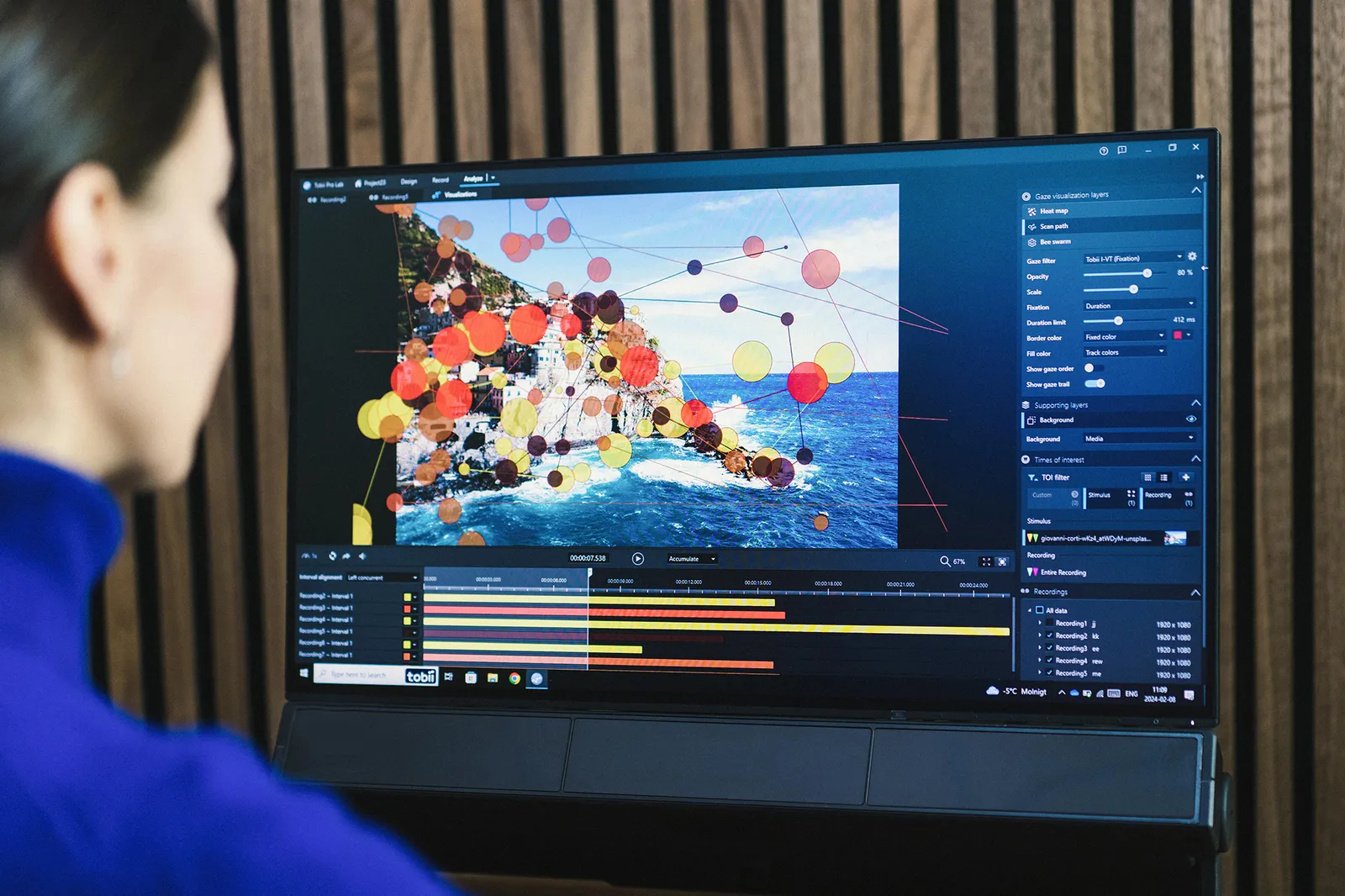
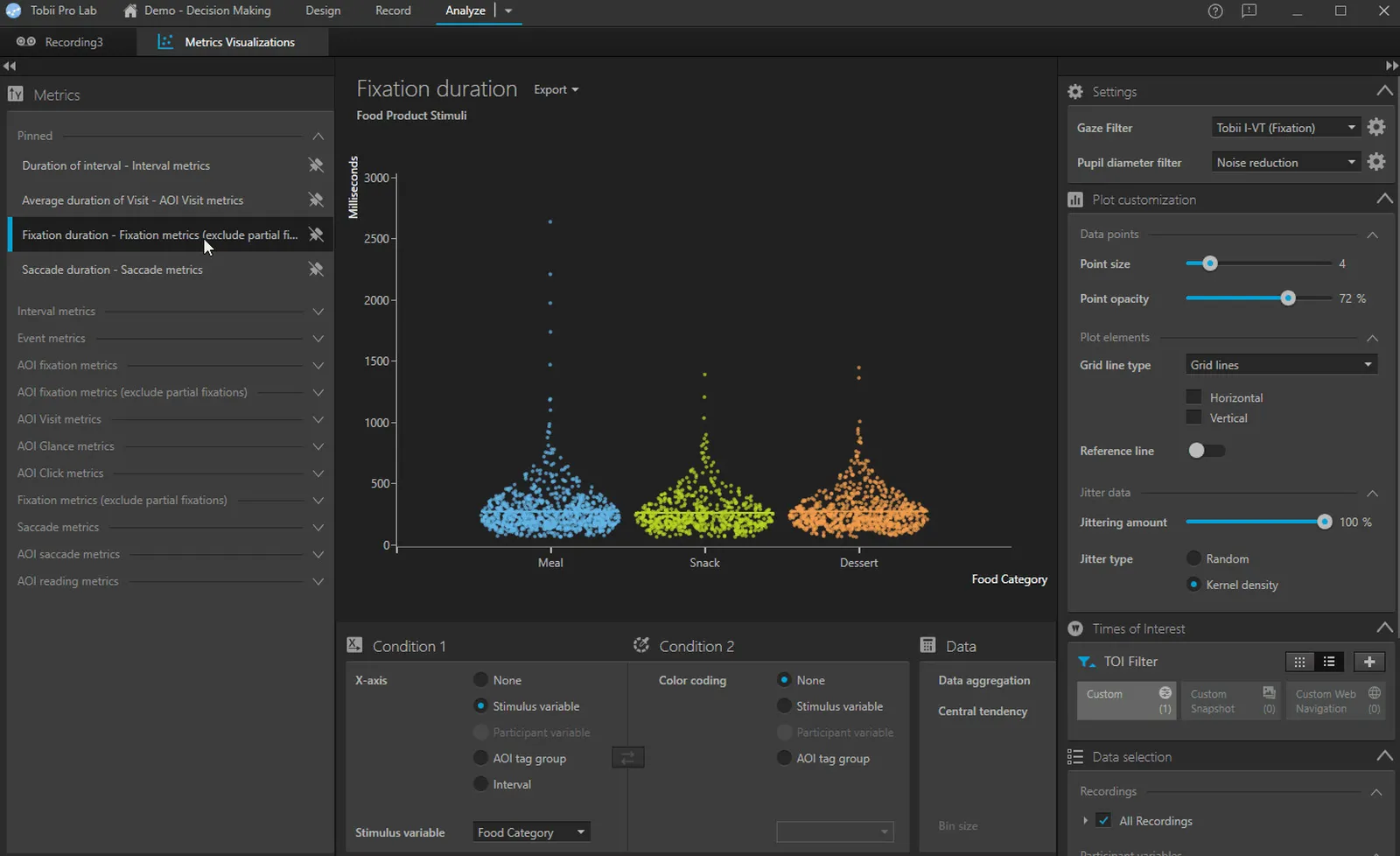
Results appear directly on the stimulus — for one person or the whole group.
Fixations are classified by the I-VT filter; from them Pro Lab calculates metrics for AOIs and time intervals.

For your own experiments and applications. Provides access to the gaze point, 3D eye position, pupil diameter and eye images. Each sample has two timestamps — from the eye tracker and from the computer.
Setting up the station before a study:
Not sure which software to choose? Describe your study.
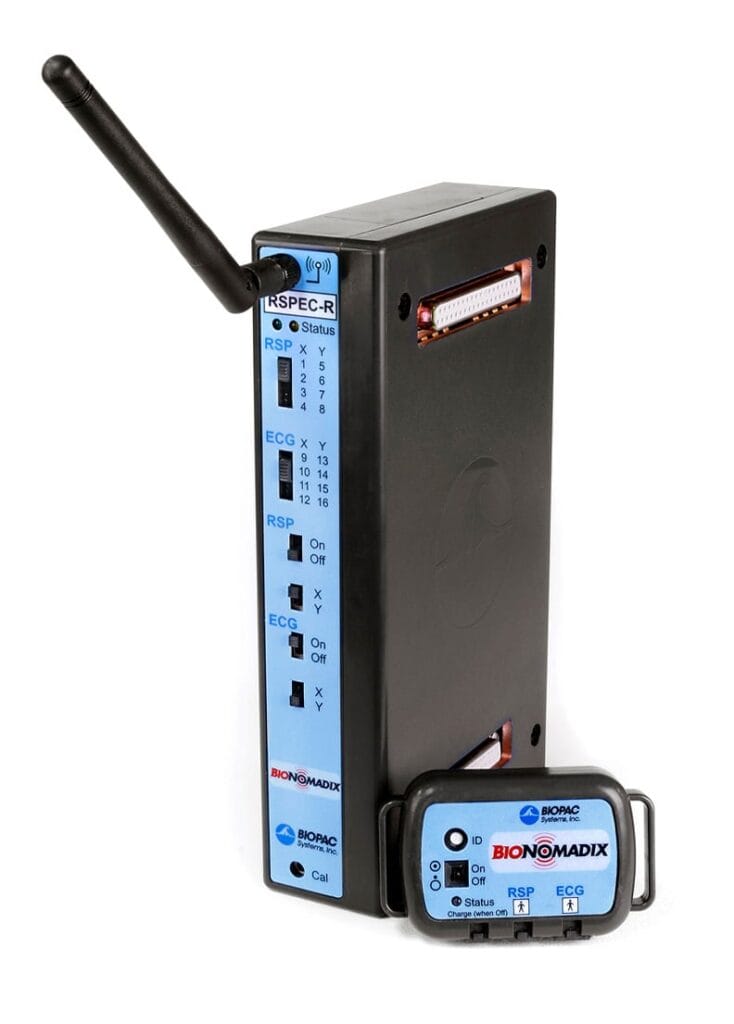
Subscription-based multimodal platforms, to which you connect an eye tracker from another manufacturer, are popular on the market. Spectrum takes a different approach: an eye tracker up to 1200 Hz with software written for eye tracking, while the other signals — ECG, GSR, EEG and more — we combine into one laboratory with a BIOPAC system.
| Feature | Tobii Pro Spectrum from Interlab | Subscription platform + competing hardware |
|---|---|---|
| Sampling frequency | up to 1200 Hz | 60–200 Hz |
| Freedom of head movement | 34 × 26 cm at 65 cm, no chinrest | at 200 Hz: 9 × 4 cm |
| Hardware synchronization | 8-bit TTL input on the eye tracker, marker accurate to 50 µs | depends on the eye tracker model |
| Eye movement analysis | Tobii Pro Lab — software dedicated to eye tracking: saccade amplitude, peak velocity and latency, heat maps, AOIs | general platform; according to its vendor, eye tracking capabilities depend on the connected hardware |
| License | SDK and Eye Tracker Manager free; Pro Lab — perpetual license or subscription | mandatory core module + separately paid eye tracking module; annual renewal |
| Physiology | BIOPAC MP200 with AcqKnowledge 6 — native support for Tobii eye trackers | additional paid platform modules |
Competing hardware: screen-based eye trackers supported by a popular multimodal platform. Data from the manufacturers’ websites, as of 2026-10.
Competing high-frequency systems are designed mainly for setups with the head immobilized. Spectrum was built for studies in which the participant sits naturally.
We advise before the purchase, set up the station and stay with your team after the purchase.
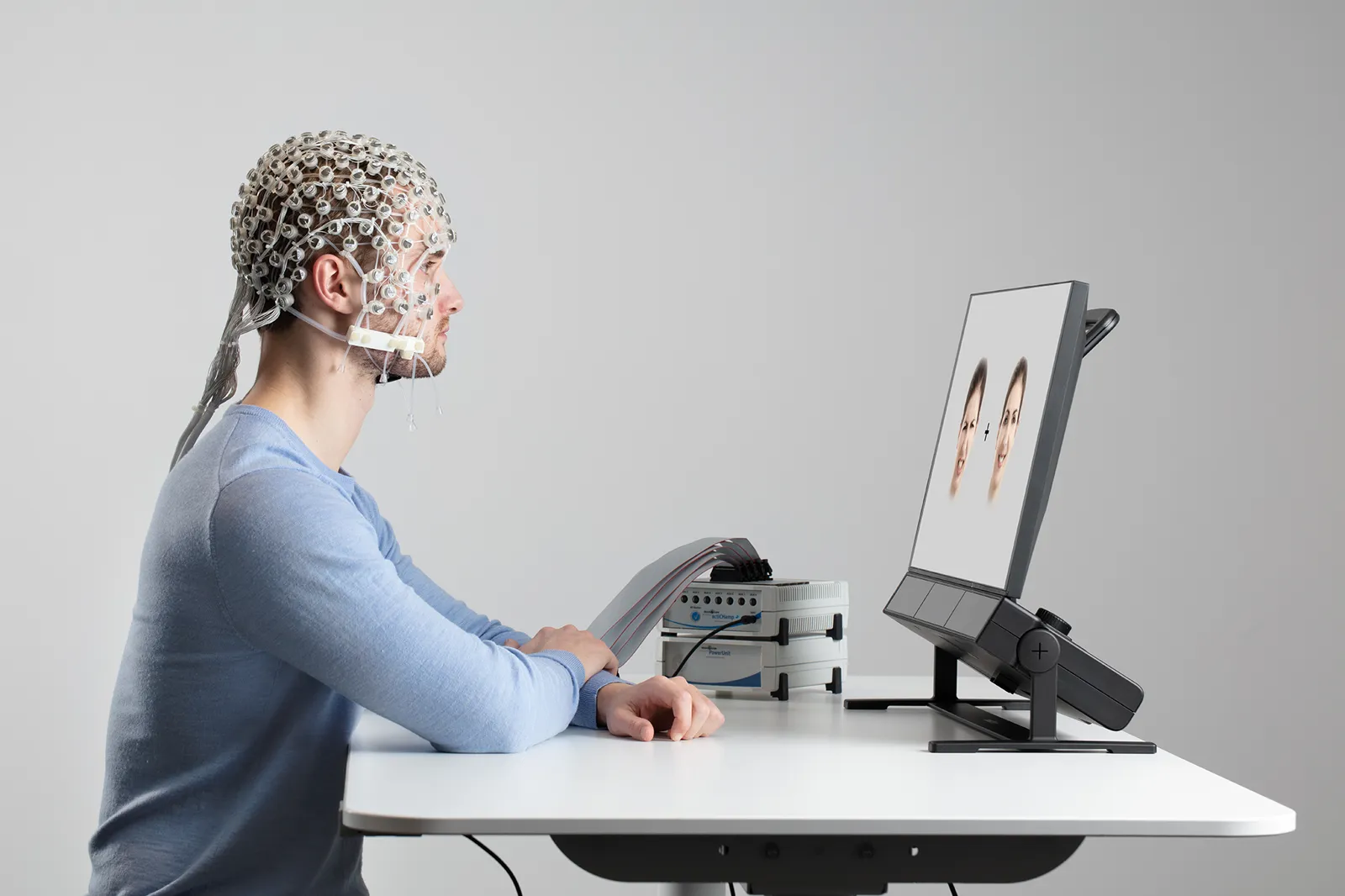
Research often combines eye tracking with other measures: EEG (brain activity), GSR (emotional arousal) or ECG. For the data to be aligned, every event — e.g. stimulus onset — must be marked at the same moment in all recordings. We supply both Tobii and BIOPAC and combine them into one station at your site — not only via TTL.
Gaze, pupil and physiology in one recording — in AcqKnowledge 6 or in Tobii Pro Lab.
The signal traces on the photo are illustrative, not a recording from the device. BIOPAC data: biopac.com (AcqKnowledge — new features, MP200 data sheet).
An eye tracker does not film the eye continuously — it takes a series of images, i.e. samples. The more samples per second, the more accurately you see fast eye movements: the saccade profile, its peak velocity and microsaccades. Scroll to see the difference.
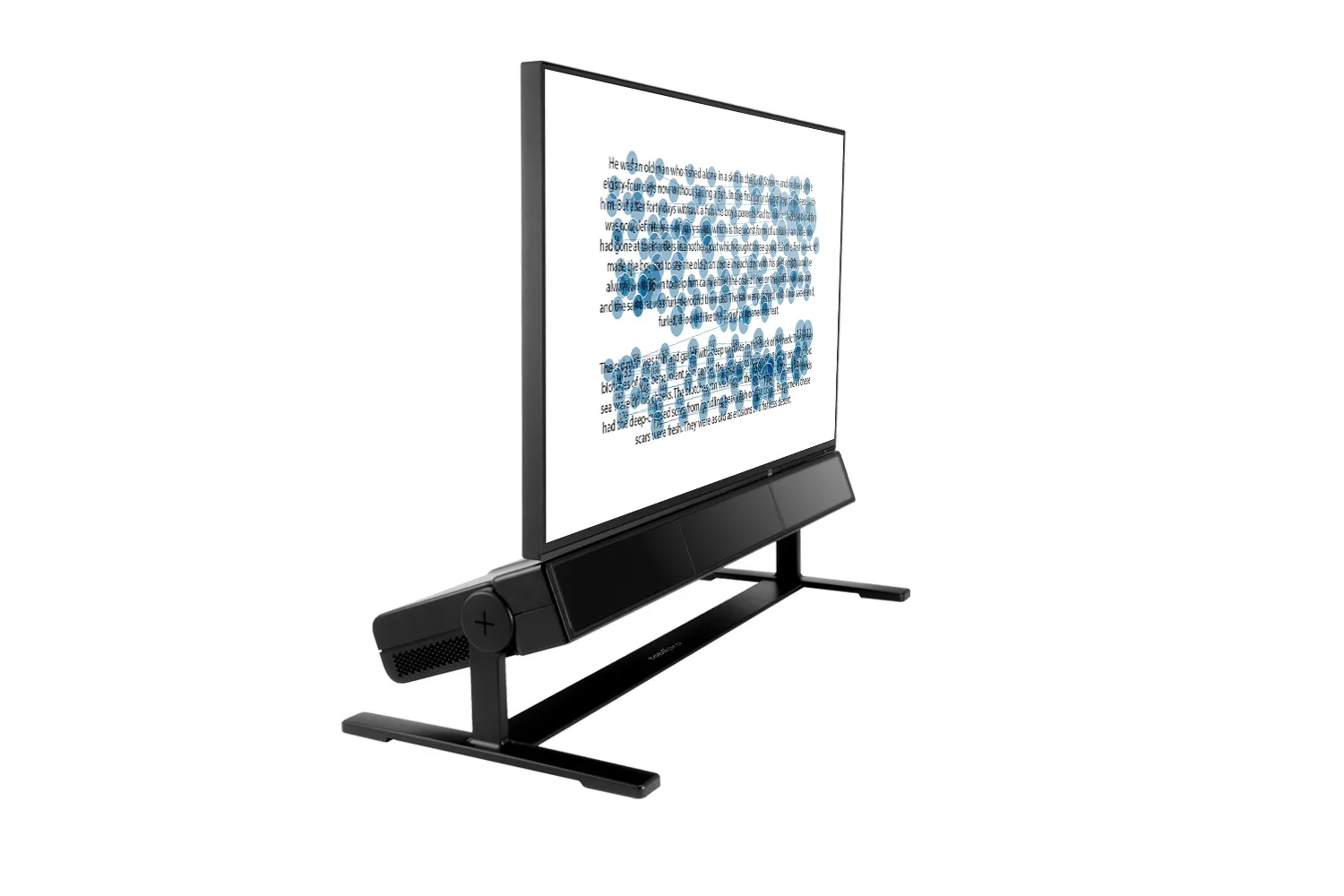
On the screen: a gaze recording of a person reading text. A circle is a place where the eye stopped; the line between circles is a saccade — a fast jump to the next word.
We break down one jump between words on a chart: how fast the eye moves in successive milliseconds. The dashed line is the actual movement, which the eye tracker does not see directly — it only knows its samples.
A few points for the whole saccade. The velocity peak is missed, and the microsaccade is not visible at all.
The gray line is the same movement recorded at 60 Hz. At 1200 Hz the samples form the full saccade profile — with its velocity peak and the microsaccade before the jump.

Illustrative chart: the saccade and microsaccade profile is a model, not a recording from the device. 250 Hz is shown for comparison — Spectrum offers 60, 120, 150, 300, 600 and 1200 Hz.
The hardware versions differ in maximum sampling frequency; in a study you choose any frequency up to the maximum of your version. Select a version to see which analyses it covers.
Based on the manufacturer’s graphic “Why sampling rate matters” (tobii.com). Spectrum also offers 150 Hz.
Not sure which version you need? Describe your study design — we will match the configuration.
For each field, the specification that usually decides the choice.
50 µsEye movements aligned with EEG and behavioral responses — event markers from the TTL input with 50 µs accuracy.
0.83 msThe course of saccades and fixations during reading with temporal resolution down to 0.83 ms.
auto bright / dark pupilAutomatic selection of bright or dark pupil mode for the participant’s eyes and lighting; participant setup usually under a minute.
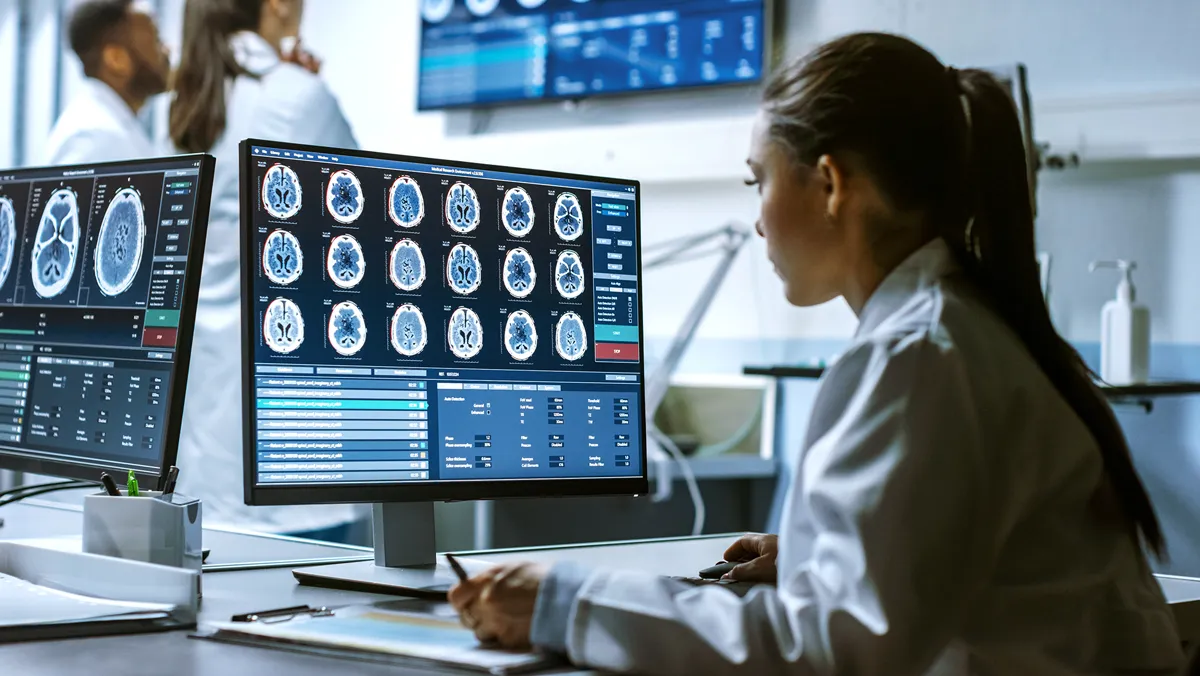
0.01° RMSSearching for biomarkers of brain function disorders — precision 0.01° RMS (filtered data, head supported).
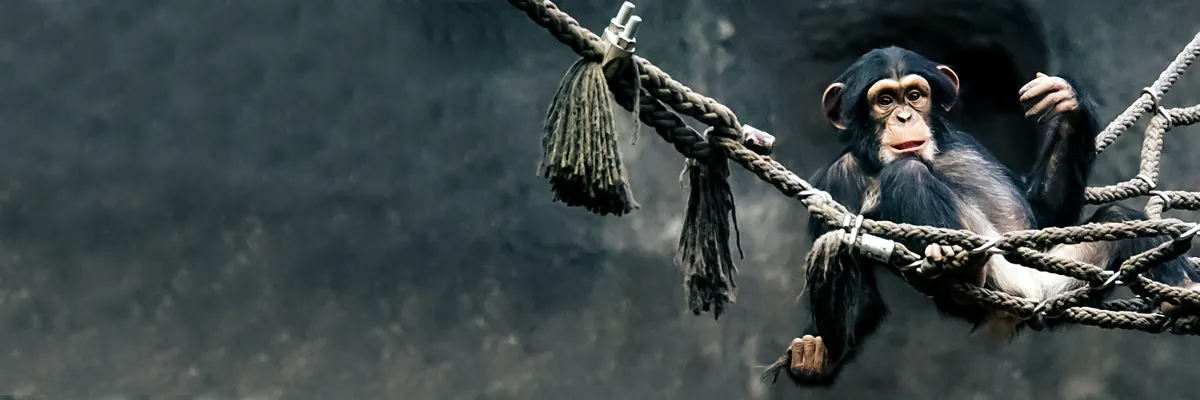
4 tracking modesDedicated tracking modes: human, great apes, monkeys and small monkeys.
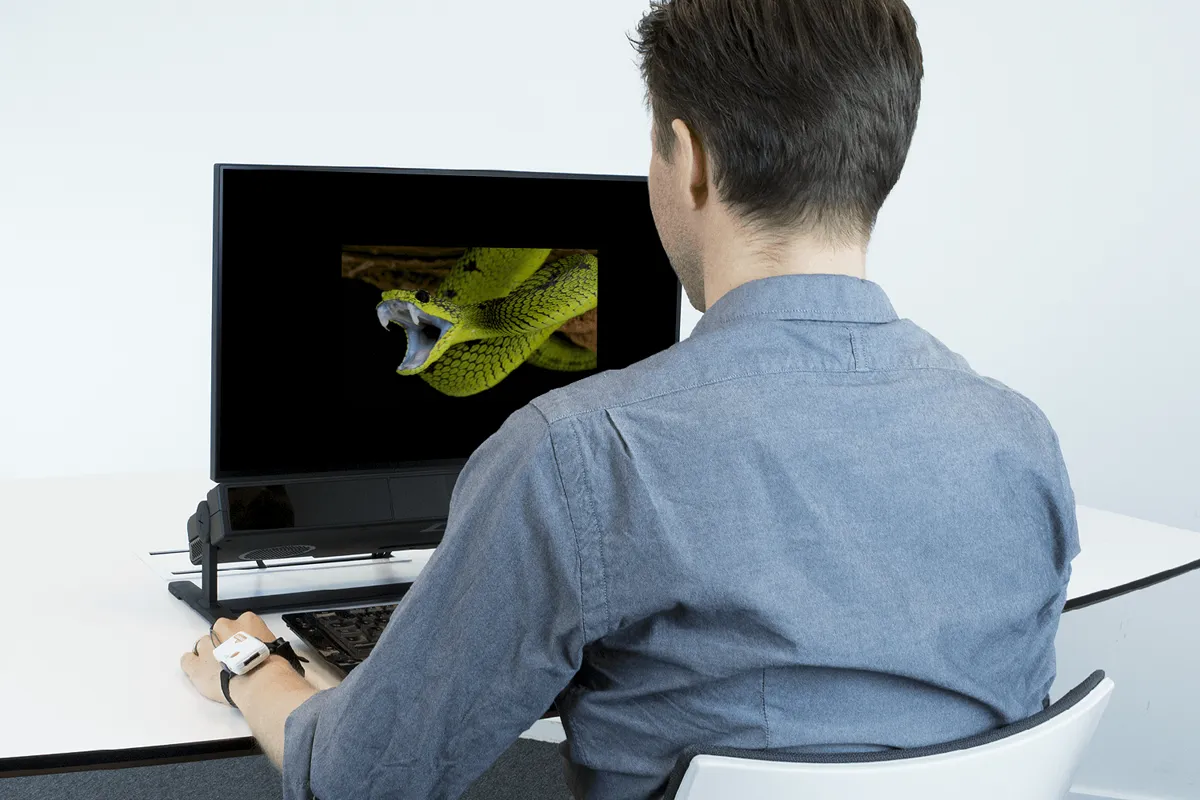
TTL 8 bitGaze and pupil together with electrodermal response (GSR) — stimulus events marked on a common timeline.
The manufacturer also lists ophthalmic studies that require freedom of head movement, and tests in which latency must be shorter than 5 ms.
Based on the manufacturer’s current specifications. Accuracy and precision are given separately for supported and free head — the way Tobii measures them.
| Specification | Value |
|---|---|
| Sampling and latency | |
| Sampling frequencies | 60, 120, 150, 300, 600 or 1200 Hzmaximum depends on hardware version: 300, 600 or 1200 Hz |
| Eye tracker latency | average < 2 ms at 1200 Hz (SD < 0.2 ms)firmware 2.2.3 and Tobii Pro SDK 1.9 or later |
| Tracking recovery | after a blink: 1 frame; after gaze loss: < 150 ms |
| Data quality | |
| Accuracy — head supported | from 0.16°; median 0.30° (P25 0.24° – P75 0.41°) |
| Accuracy — free head | from 0.17°; median 0.43° (P25 0.32° – P75 0.59°) |
| Precision — head supported | 0.01° RMS (Savitzky-Golay filter) · 0.06° RMS (raw signal)under optimal conditions |
| Precision — free head | 0.02° RMS (Savitzky-Golay filter) · 0.08° RMS (raw signal)under optimal conditions |
| Participant | |
| Head movement box | 34 × 26 cm at 65 cm · 42 × 26 cm at 75 cm |
| Operating distance | 55–75 cm from the eye tracker |
| Optimal screen size | up to 24″ (16:9) |
| Calibration | binocular or monocular; usually under 30 sparticipant setup usually < 1 min |
| Tracking modes | human, great apes, monkeys, small monkeys |
| Data and synchronization | |
| Data output | timestamp, eye position, gaze point, pupil diameter; eye openness (mm, separately for each eye)eye images approx. 10 Hz |
| TTL input | 8-bit, DB-9 connector, 256 event codes; marker accuracy 50 µs |
| Synchronization with the computer | 100 µs accuracy (eye tracker ↔ computer time domain) |
| Device | |
| Dimensions and weight | 55 × 18 × 6 cm (on the stand +9 cm); 5.1 kg (with power supply 5.7 kg) |
| Connectors | Ethernet (RJ-45), TTL input (DB-9), 24 V DC power |
| Power consumption | typically 60 W, max. 96 W |
| Operating systems | Windows, macOS, Linux |
| Software | Tobii Pro Lab, Tobii Pro Eye Tracker Manager, Tobii Pro SDK and applications built on it |
| In the box | eye tracker unit, EIZO 23.8″ monitor, power and data cables, quick start guideTobii Pro SDK and Eye Tracker Manager licenses included; Tobii Pro Lab license sold separately |
Comparison based on the manufacturer’s data. The choice depends on whether you analyze fixations or eye movement dynamics.
| Specification | Pro Spectrum | Pro Fusion | Pro Spark |
|---|---|---|---|
| Intended use | microsaccades, tremor, saccade dynamics, multimodal research | saccade analysis, reading, portable laboratory | fixation-based research, UX, teaching |
| Max. sampling rate | 1200 Hz | 250 Hz | 60 Hz |
| Precision (filtered) | 0.01° RMS | 0.04° RMS | 0.26° RMS |
| Cameras | two | two | one |
| Hardware TTL synchronization | yes — 8-bit, 50 µs | no | no |
| Form factor | unit with monitor, 5.1 kg | portable bar, 168 g | portable bar, 97 g |
Source: tobii.com, Tobii Pro Spectrum product page (as of 2026-10). Older manufacturer documents give different accuracy values — they result from a different measurement methodology.
In many paradigms, no — the head movement box is 34 × 26 cm at 65 cm. A chinrest does, however, improve data quality: filtered precision is 0.01° RMS with the head supported and 0.02° RMS with free head, and median accuracy is 0.30° and 0.43° respectively.
In hardware: via the TTL input (8-bit, DB-9, 256 event codes) — a timestamp accurate to 50 µs goes into the eye tracker data stream. In software: via Tobii Pro SDK, which synchronizes the eye tracker clock with the computer clock to 100 µs accuracy.
The manufacturer gives separate values for supported and free head, and for raw and filtered data. In your publication, report the variant that matches your protocol. Older Tobii documents (e.g. Product Description 2.0.3) describe a different measurement methodology, and their values should not be mixed with the current ones.
Tobii Pro Lab for study design, recording and analysis (license sold separately) or Tobii Pro SDK for your own applications — the SDK and Tobii Pro Eye Tracker Manager are free and included. Spectrum works with Windows, macOS and Linux.
The eye tracker unit on a stand, an EIZO 23.8″ monitor, power and data cables (24 V power supply, Ethernet cable) and a quick start guide.
The manufacturer’s documentation provides for upgrading lower versions to a faster one. We will confirm current terms and cost in a quote — ask us.
Related products
BiometricsECG (Heart Activity)Research & Scientific InstrumentsRSP (Respiration)
Eye TrackingMobile (Glasses)Research & Scientific InstrumentsSoftware
Product: Tobii Pro Spectrum