Splice loss
0.01 dB
Average value for SM fibre
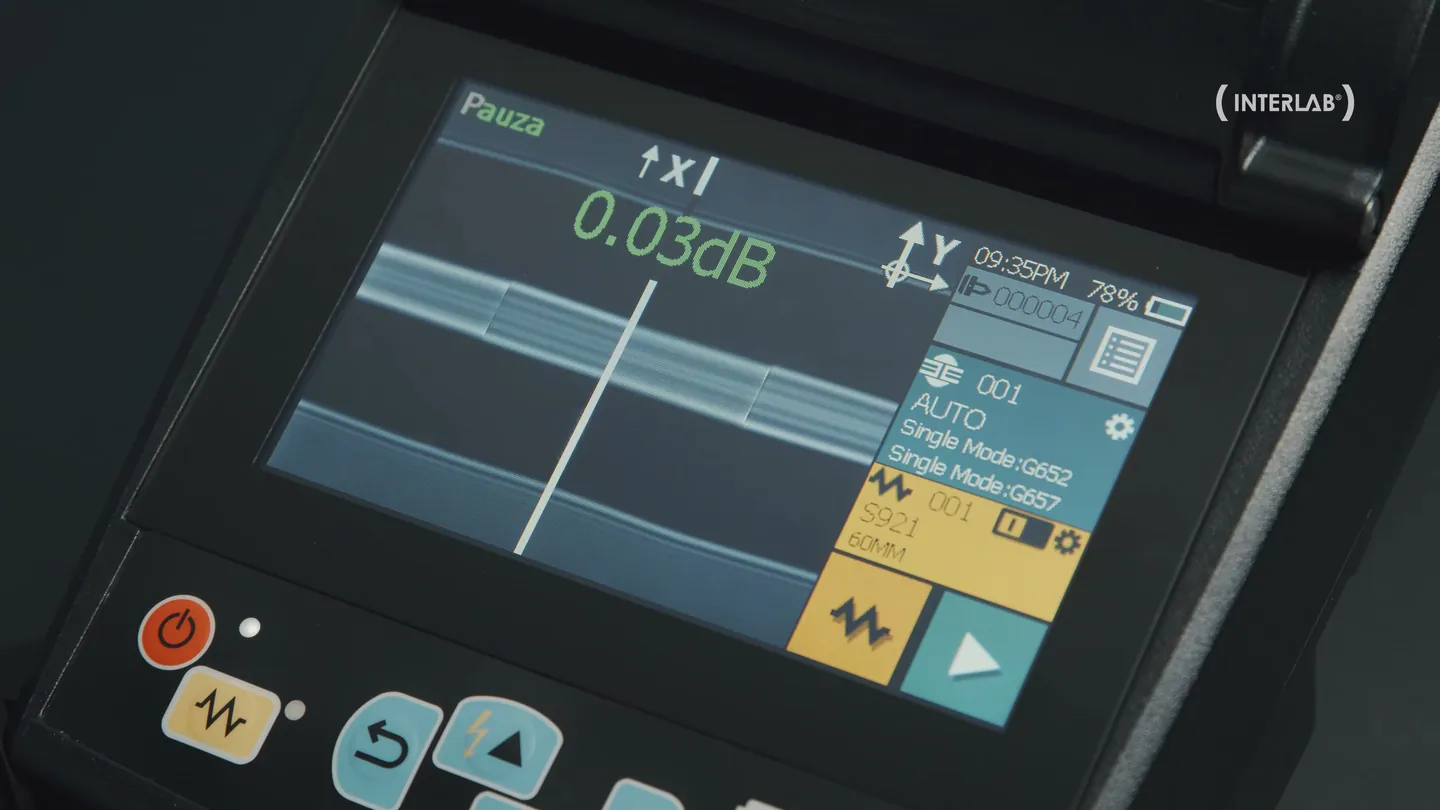
This datasheet value is obtained using the manufacturer's procedure when splicing identical fibres. The splicer displays an estimate, not a certification measurement.

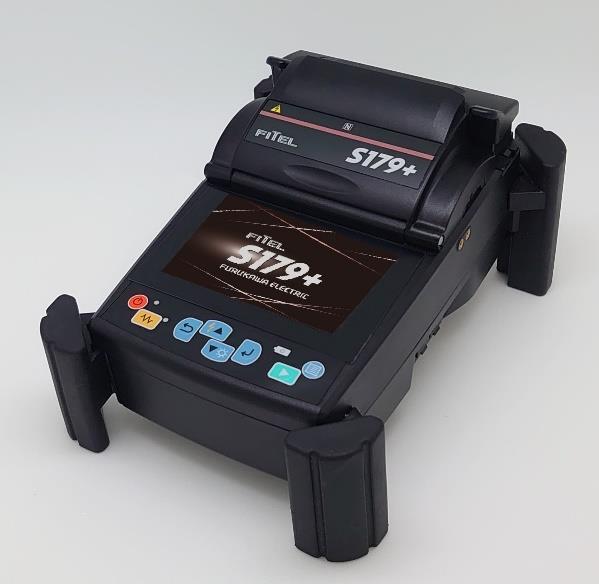
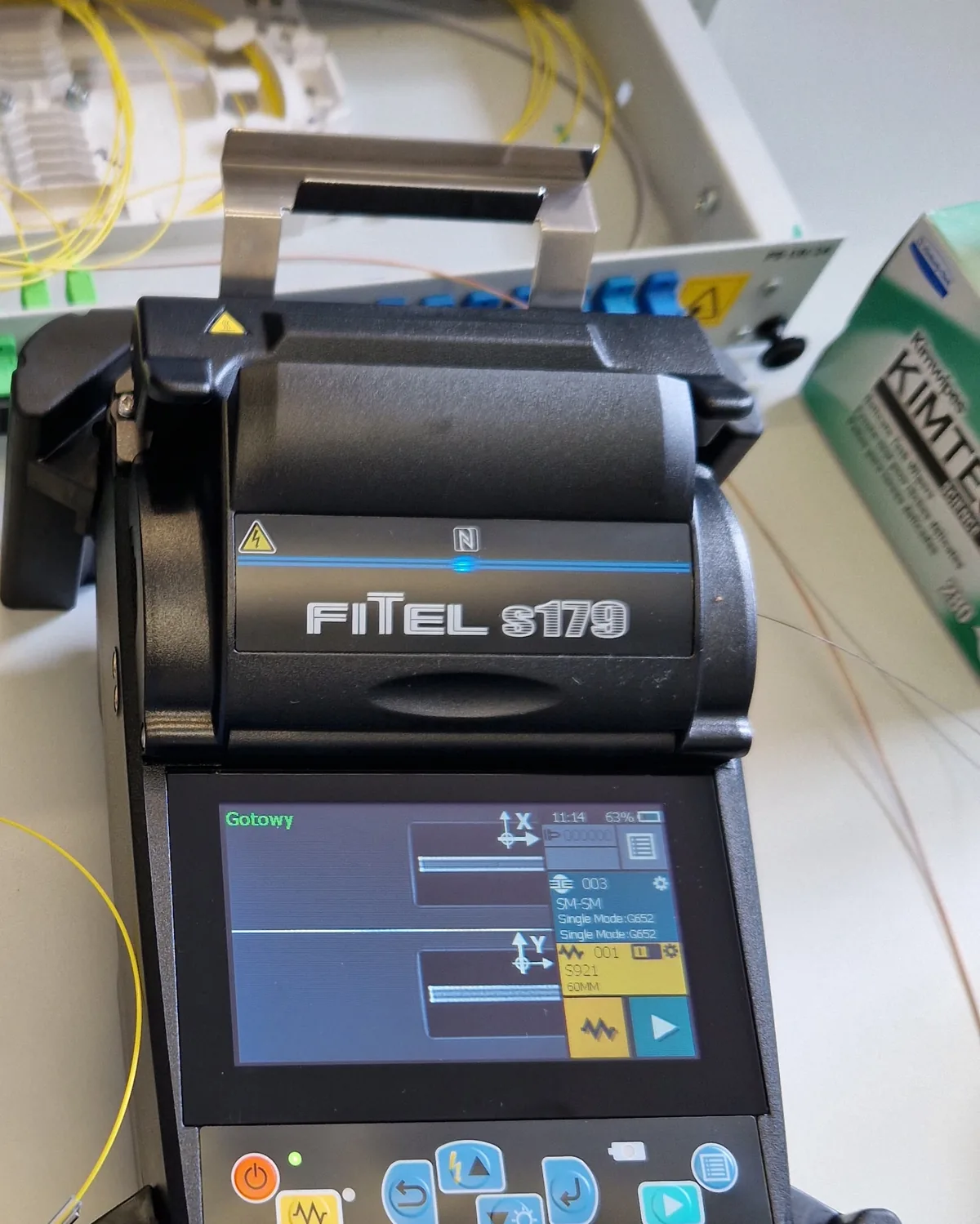
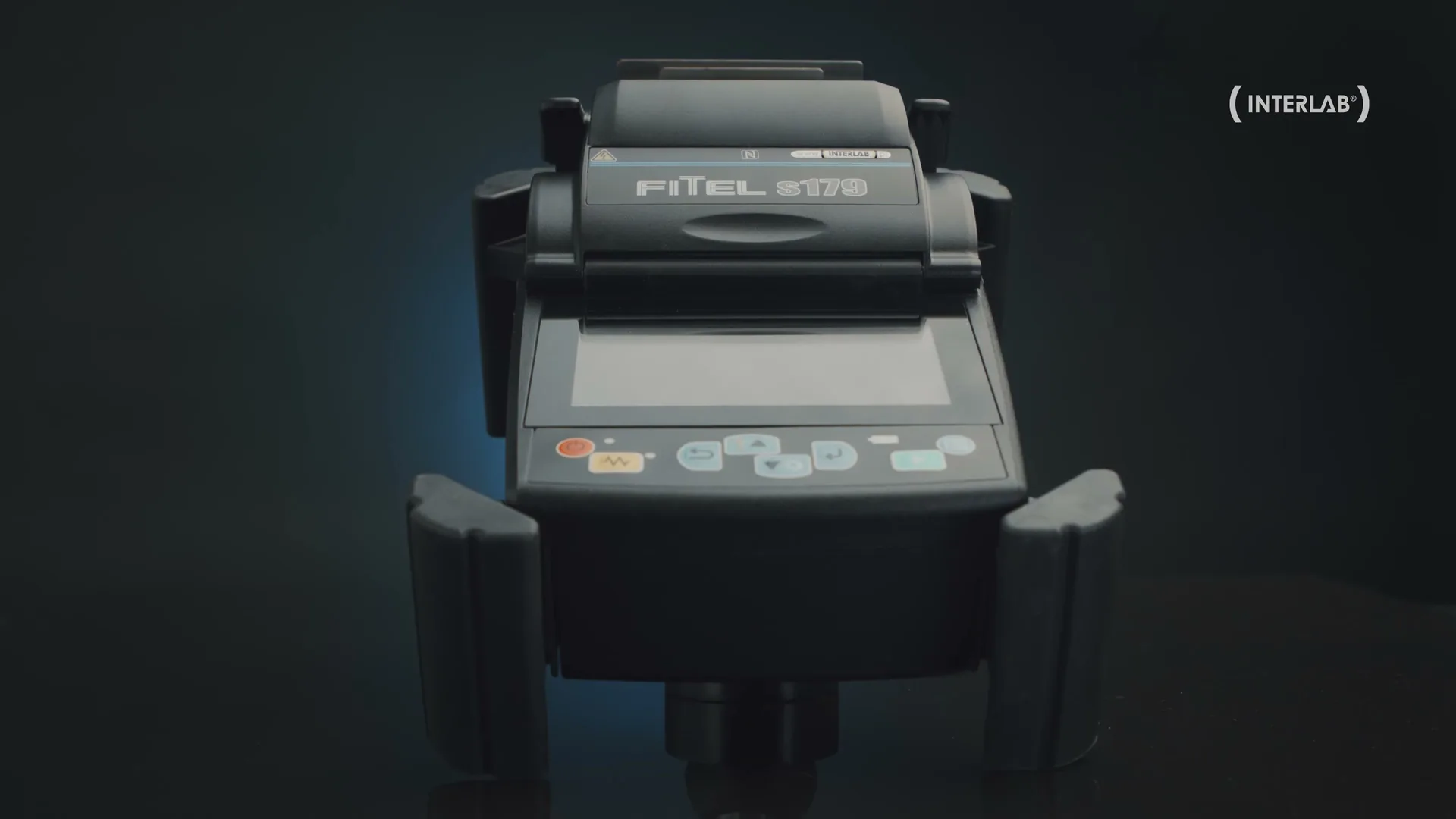
FITEL S179+ Core Alignment Fusion Splicer
The S179+ combines low transmission loss with a parameter often missing from comparisons: splice return loss of at least 70 dB, corresponding to splice reflectance no greater than −70 dB.
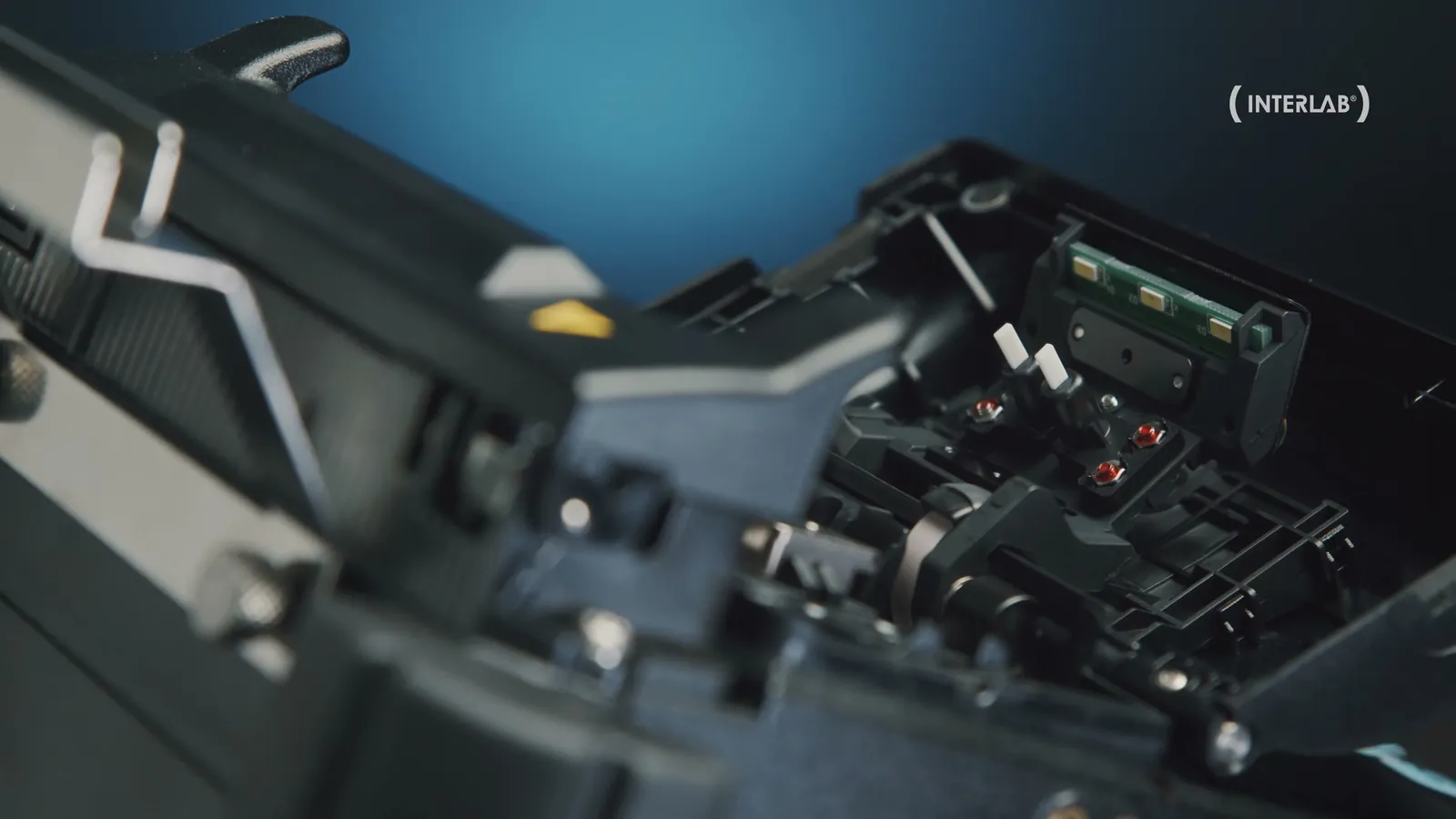
The specifications apply to the S179+. The image is a frame from an Interlab video about the earlier S179 platform and illustrates the unit's design.
Two dimensions of splice quality
Loss describes how much power is lost at the splice. Reflectance describes how much returns towards the transmitter. Both parameters matter in high-speed links, analogue transmission, DWDM systems and applications with reflection-sensitive lasers.
Splice loss
0.01 dB
This datasheet value is obtained using the manufacturer's procedure when splicing identical fibres. The splicer displays an estimate, not a certification measurement.
Reflection · splice reflectance
≤ -70 dB
The manufacturer specifies Splice Return Loss ≥70 dB. In the standard convention, this corresponds to single-splice reflectance ≤−70 dB.
Splice reflectance in published specifications
The 10 dB difference between these published limits corresponds to a tenfold lower upper limit of the reflected-power fraction. The reference value comes from a publicly available datasheet for a selected competing device, current as of 16 July 2026, and does not represent every device on the market. Measurement methods, modes and test conditions may differ. This compares published specifications and is neither an independent test nor a claim of superiority over every competing solution.
What changes with the S179+
ACCS reduces the impact of an increased cleave angle, FAS stabilises arc conditions, and the enhanced algorithm improves the estimation of elevated loss associated with core microbending.
When the relative cleave angle is between 2 and 5 degrees, the S179+ adjusts arc conditions to mitigate increased loss. The manufacturer still recommends a cleave angle of no more than 2 degrees and does not guarantee the specified average value at larger angles.
The Fluid Arc System monitors and corrects the discharge during operation. According to the manufacturer, it stabilises results under pressure changes equivalent to a 1,000 m altitude difference without a manual Arc Check procedure.
The enhanced algorithm better identifies cases of increased loss associated with core microbending. This remains a splicer estimate; acceptance testing of the link requires an appropriate measurement.
A visible, transparent process
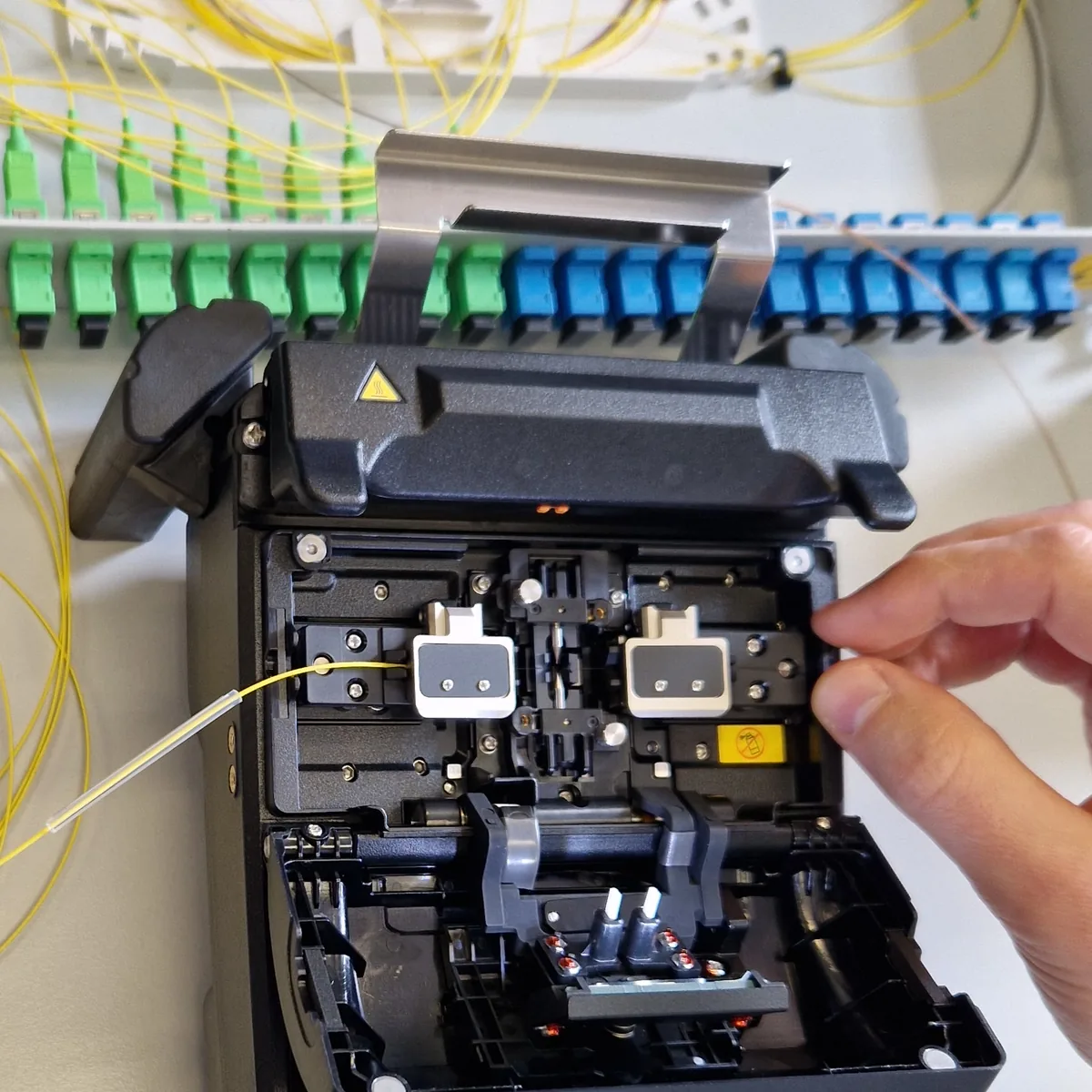
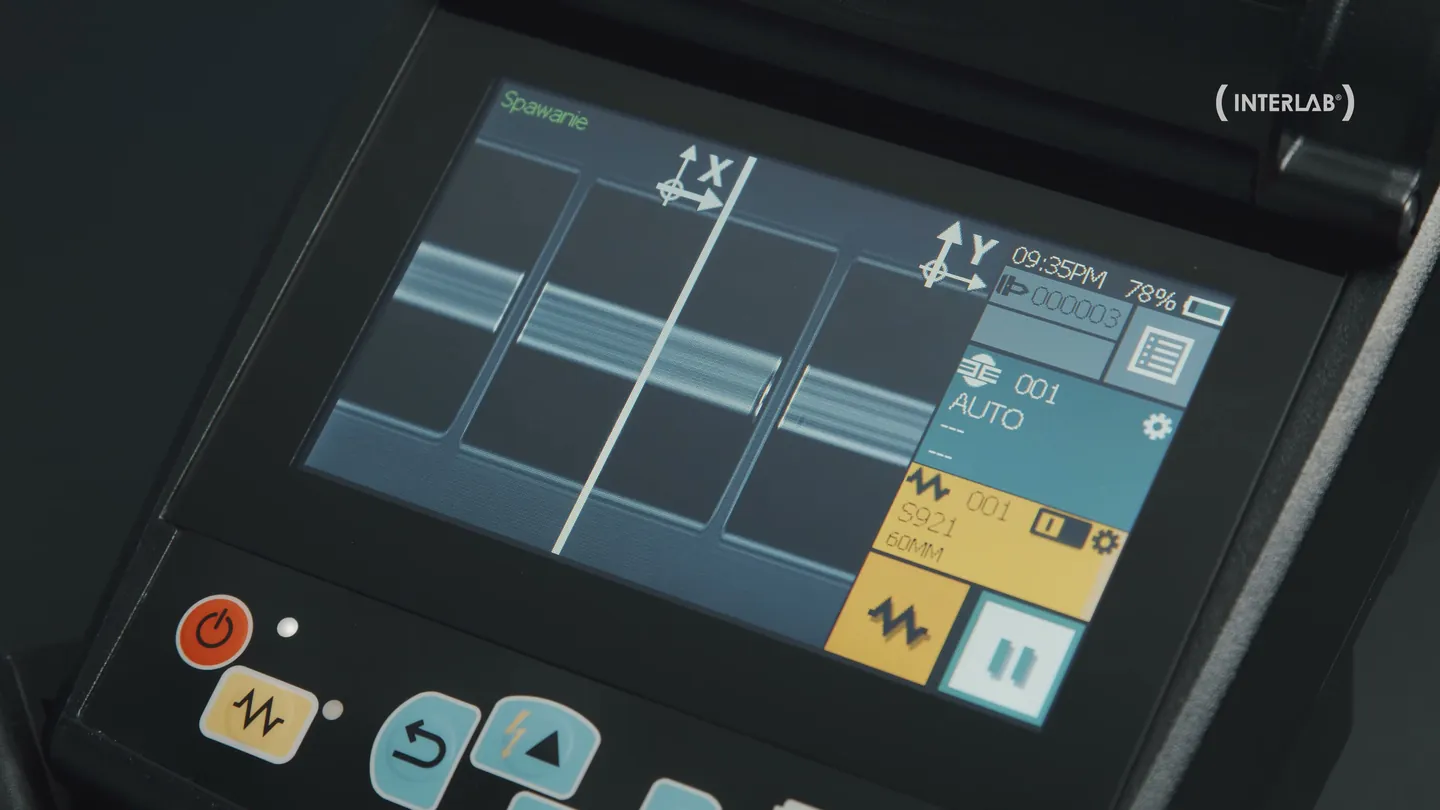
The wide chamber, 3+1 LED illumination and 4.3-inch touchscreen make it easier to monitor the process. Physical buttons remain available when gloves or field conditions make touch operation difficult.
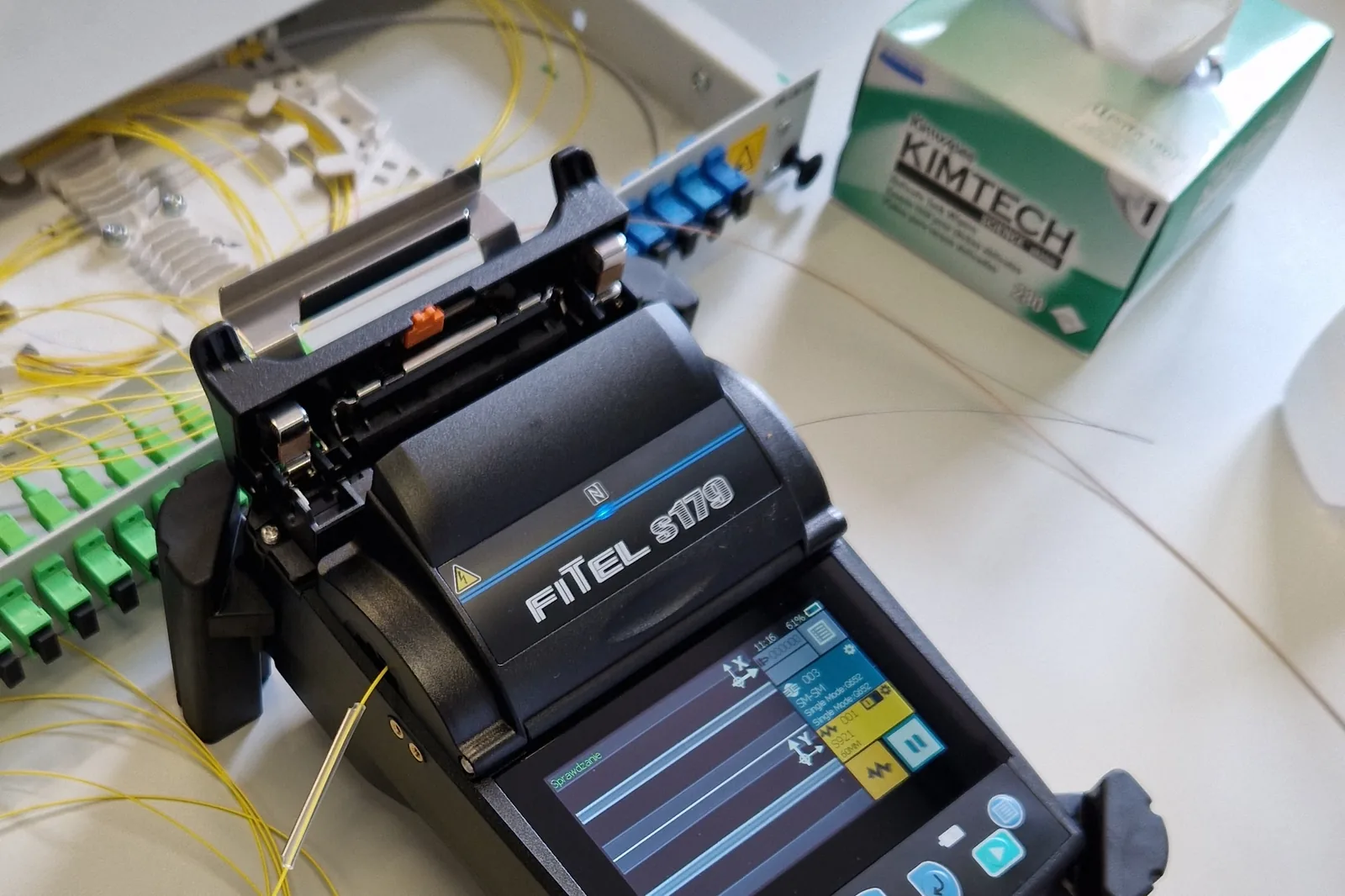
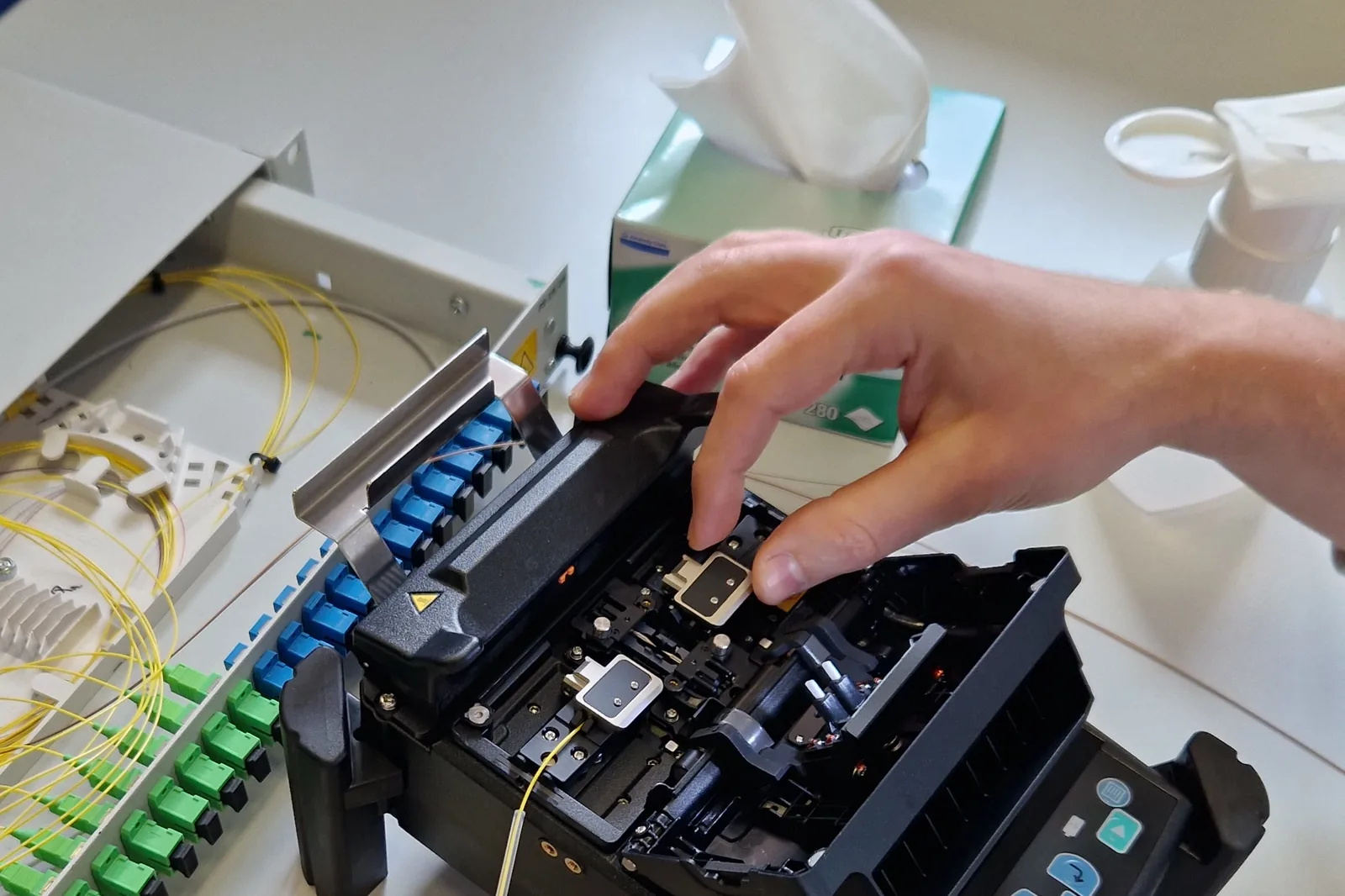
S179 in practice
The elongated design and wide-opening chamber work well in confined workspaces. The photo was taken by the Interlab sales team while working with the equipment.
Built for uncompromising field work
The S179+ weighs 2.0 kg with the battery, while the manufacturer publishes results for drop, dust, splash and mechanical-impact tests.
Connectivity and maintenance
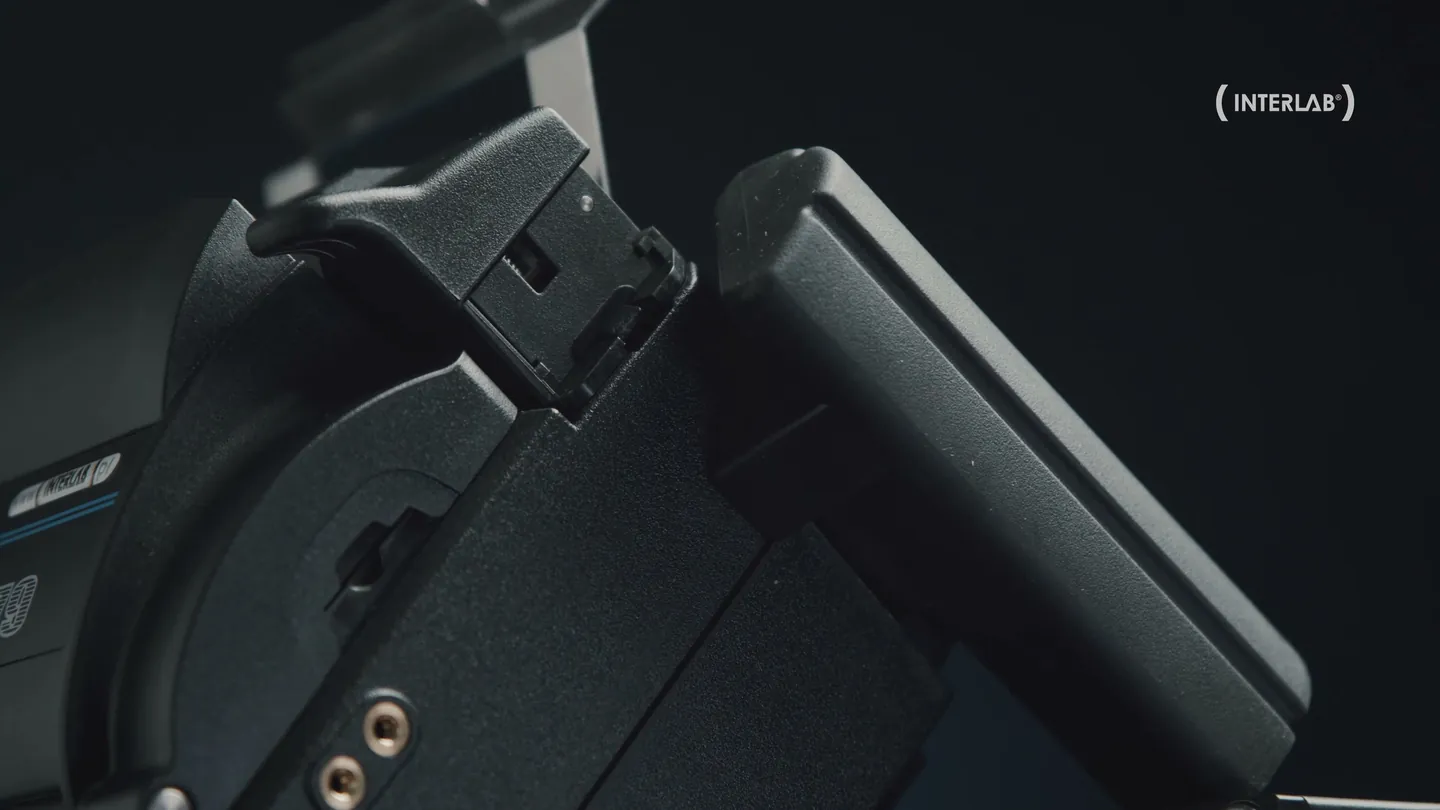
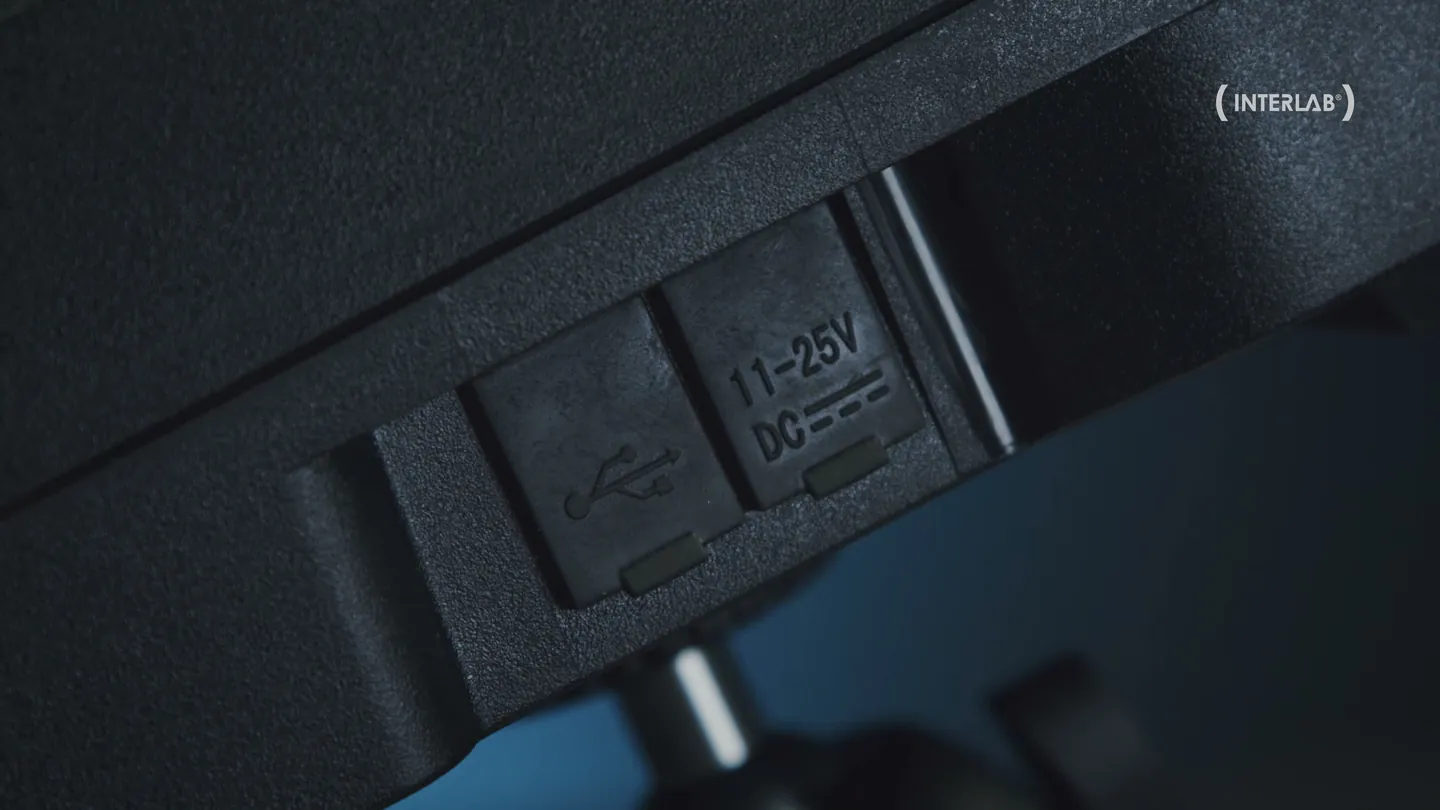
NFC can be used to lock and unlock the unit with a smartphone. Wi-Fi communication requires a compatible adapter. The removable left V-groove facilitates cleaning of the optics and chamber without extensive disassembly.
Current Interlab configuration
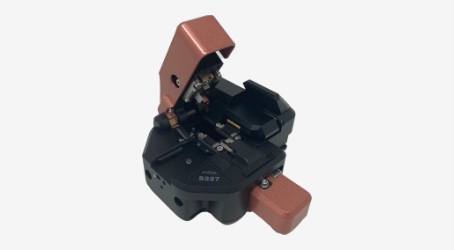
Our current commercial configuration features the current S327A; the exact kit contents and fibre-holder variant are confirmed in the quotation.
Current cleaver model
The manufacturer's official standard package does not list a cleaver. The S327A is part of Interlab's commercial configuration and is therefore subject to confirmation in the quotation.
Interlab video
This Polish-language archive video was produced in 2021 and shows the earlier S179 with the S326 cleaver. The technical specifications on this page apply to the S179+, while the current Interlab configuration uses the S327A.
Technical specifications
Values follow the current manufacturer datasheet. Heating time and cycle count depend on the sleeve, operating mode, battery condition and environmental conditions.
| Fibre types | SM G.652/G.657A1/A2, MM G.651, DSF G.653, cut-off shifted / large-area G.654, NZD G.655, BIF/UBIF G.657B3 |
|---|---|
| Average splice loss | SM 0.01 dB; MM 0.01 dB; DSF 0.03 dB; NZD 0.04 dB |
| Splice return loss | ≥70 dB, equivalent to splice reflectance ≤−70 dB |
| Splice time | 6 s in semi-auto mode |
| Heating time | 9 s for 60 mm Tyco SMOUV1120-01; 13 s for FITEL S921 250 µm; 15 s for S921 900 µm |
| Programs | up to 300 splice programs and 100 heating programs |
| Memory | 20,000 results; the latest 100 images stored automatically plus 100 images stored permanently |
| Battery | typically 220 splice-and-heat cycles, 90 s/cycle, at 20°C |
| Weight | 1.7 kg without battery; 2.0 kg with battery |
| Dimensions | 139 × 209 × 114 mm without bumper; 179 × 246 × 131 mm with bumper |
| Display | 4.3-inch colour LCD touchscreen |
| Image magnification | 104×, 278×, 556× |
| Squeeze motor force | 8 N, design value |
| Tension test | 1.96 N |
| Cladding / coating diameter | 80–150 µm / 100–3,000 µm |
| Cleave length | 5–16 mm |
| Sleeves | 20, 40 and 60 mm |
| Environmental resistance | 76 cm drop on 5 sides; equivalent to IP5X/IPX2 and IK07 |
| Operating temperature | −10 to +50°C |
| Altitude / wind | up to 5,000 m above sea level / up to 15 m/s |
| Interfaces | USB mini-B, USB-A, NFC, Wi-Fi ready |
| Power supply | AC 100–240 V, 50/60 Hz; DC 11–24 V |
Manufacturer document
The current document confirming ACCS, FAS, splice loss and splice return loss ≥70 dB.
Brand information: the current official S179+ page states that the product is made by Lightera™ and marketed by Furukawa Electric. The product brand remains FITEL.
Technical questions
If your application involves specialty fibres, SOCs, drop cables or dedicated holders, the configuration should be confirmed before ordering.
Yes. The S179+ is a single-fibre fusion splicer with direct core alignment and two-axis fibre observation.
It means that only a very small fraction of power is reflected by a single splice. The manufacturer expresses the same parameter as Splice Return Loss ≥70 dB. It is not the ORL of the entire optical path.
No. The ≤−70 dB value is a datasheet specification, while the splicer estimates loss from the fibre image. An OTDR can evaluate reflective events within its sensitivity and measurement range; this does not confirm ≤−70 dB for every splice.
The S179+ adds ACCS, the Fluid Arc System and an enhanced loss-estimation algorithm. The data on this page applies to the S179+; the archived Interlab video shows the earlier S179 platform.
Interlab offers a commercial configuration with the current FITEL S327A cleaver. The exact scope, holders and accessories are confirmed in the individual quotation.
No. It is an average datasheet value obtained under the manufacturer's conditions and procedure using identical SM fibres. The actual result depends on the fibres, preparation, cleanliness and operating conditions, among other factors.
They include SM G.652 and G.657, MM G.651, DSF G.653, G.654, NZD G.655 and bend-insensitive G.657B3 fibres, with a cladding diameter range of 80–150 µm.
The 6-second figure applies to semi-auto mode. The manufacturer specifies 9 seconds for a particular Tyco sleeve in Power mode; for FITEL S921 sleeves, the specified time is 13 or 15 seconds. Times depend on the sleeve and operating conditions.
Match the configuration to your work
Talk to us about fibre types, holders, required documentation and a configuration with the S327A.