
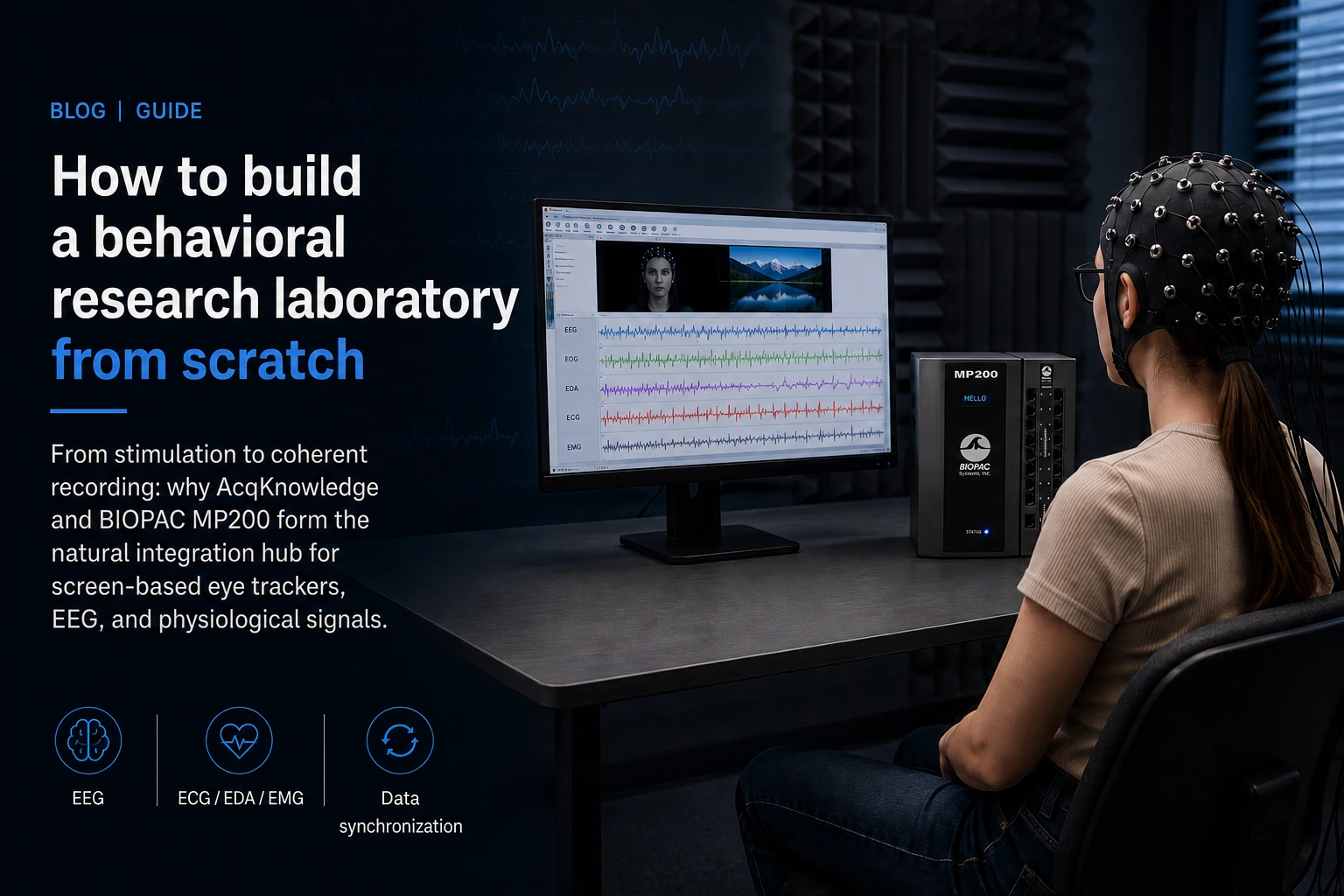
How to build a behavioral research laboratory from the ground up
From stimulation to coherent recording: why AcqKnowledge software and the BIOPAC MP200 unit form the natural integration hub for screen-based eye trackers, EEG, and physiological signals.
Designing a behavioral research laboratory most often stalls at the stage of selecting independent devices. Purchasing a separate eye tracker, an EEG system, and physiological amplifiers from different manufacturers without a well-thought-out acquisition core leads to the creation of ‘hardware islands.’ Each device records data using its own clock, and attempting to later merge and manually synchronize them in a spreadsheet drastically increases analysis time and introduces millisecond-level errors.
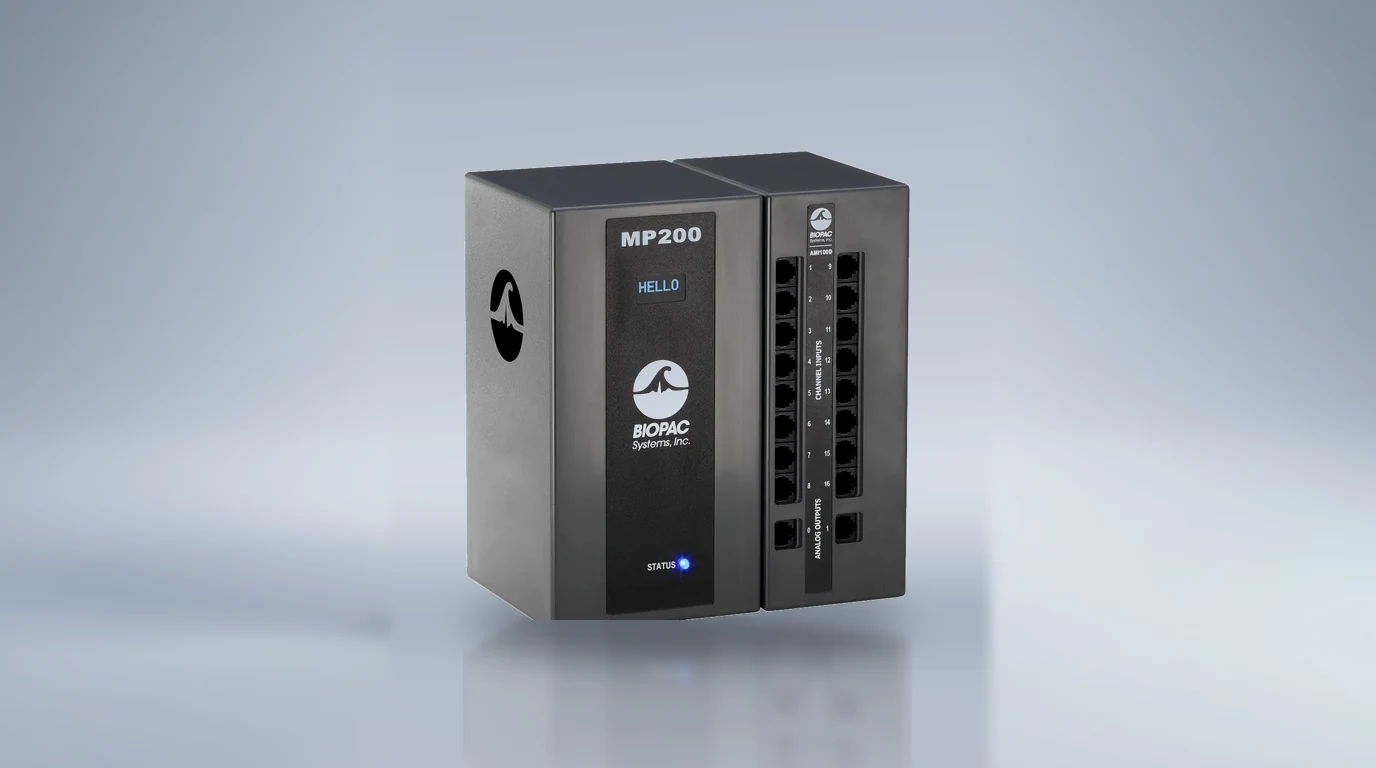
The way to avoid this problem is to build the measurement pipeline around a single, proven integration core. In the BIOPAC architecture, this role is fulfilled by the MP200 unit along with the AcqKnowledge (ACQ)software. Integration is straightforward, but its scope depends on the licences you own. Physiological modules connected to the MP200 appear in AcqKnowledge immediately. A screen-based eye tracker requires the ACK100W-EYE licence, and receiving streams from external systems requires ACK100-LSL. In a supported configuration, a single press of the record button starts one synchronised recording and gives you a complete analysis environment in one place.
1. AcqKnowledge and MP200 as the integration hub of the measurement pipeline
The traditional approach to laboratory construction assumed separate software for each device: one program recorded gaze, another recorded EDA/ECG signals, and yet another recorded the brain’s electrical activity (EEG). This required complex post-processing and manual alignment of time axes. Modern architecture relies on integration within master software. That does not make hardware TTL pulses obsolete — for precise event markers they can still be the right choice, depending on the equipment and the study protocol.
In systems distributed by Interlab, this hub is the BIOPAC MP200 working alongside flagship AcqKnowledgesoftware. Physiological modules connect straight into the MP200 unit and AcqKnowledge sees them without additional licences. External devices are different: a screen-based eye tracker (e.g., Tobii Pro Spectrum or Tobii Pro Spark) requires the ACK100W-EYE licence, and EEG systems streaming over the network require ACK100-LSL. Only then do they appear as channels in AcqKnowledge.
ACK100W-EYE licence (Eye Tracking Integration)
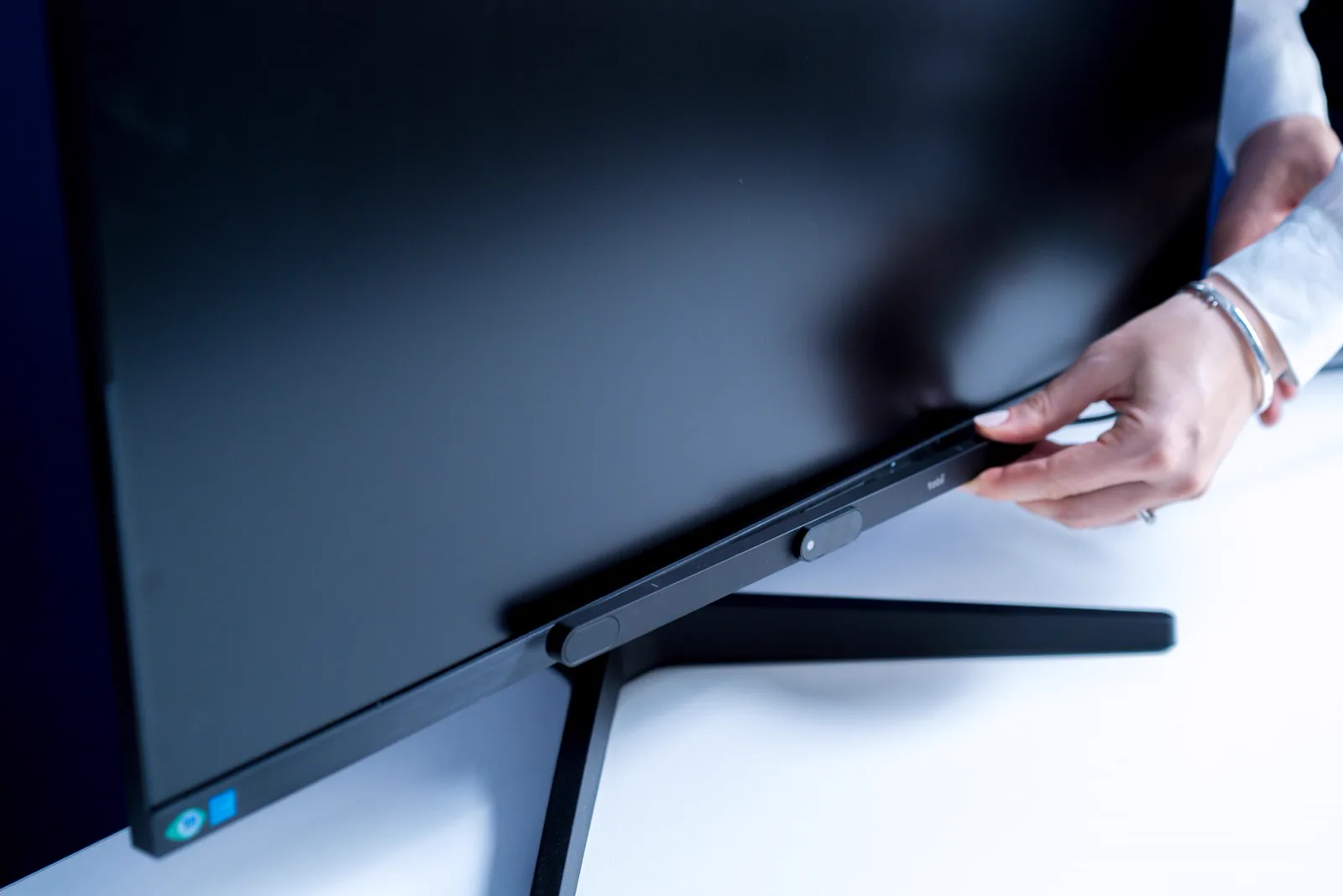
Native integration of a screen-based eye tracker with AcqKnowledge is a separate, paid licence. It covers device configuration, multipoint calibration (5/9/16 points), defining areas of interest (AOI) with automatic hit and exit event marks, and recording gaze data together with physiology in a single file. It supports EyeTech, Tobii and EyeLogic screen-based eye trackers and requires Windows. Stimulus Presentation is included. It does not cover wearable glasses — those need a separate workflow with post-session import and synchronisation.
The primary advantage of this solution is the recording workflow: the moment the record button is pressed in AcqKnowledge, the software automatically initiates synchronization of all data streams. The researcher receives a live preview of physiological signals side-by-side with behavioral and gaze variables on a single screen, eliminating the need for subsequent importing and manual alignment of CSV files.
| Pipeline parameter | MP200 technical specifications | Methodological importance for the laboratory |
|---|---|---|
| Number of analog channels | 16 input channels | Ability to simultaneously measure EDA, ECG, EMG (multiple muscles), respiration, and blood pressure without switching cables. |
| Maximum sampling rate | 100 kHz per channel (1600 kHz aggregate) | Precise recording of fast variables, such as EMG micro-potentials or pulse wave without phase distortion. |
| PC communication | Ethernet interface (LAN) | Reliable, high-bandwidth transmission isolated from USB bus interference. |
| Station scalability | Linking units over LAN | Ability to expand the station with additional MP200 units for team research or hyperscanning. |
2. Stimulus presentation: Presentation Designer and external applications
Every behavioral experiment requires precise stimulus display and recording of onset times. AcqKnowledge provides an internal design tool that eliminates the need to script in external programming environments.
STIM-PRES-ACK100-LIC License (Presentation Designer)
The stimulus presentation module integrated into AcqKnowledge is a separate, paid add-on license (requires base AcqKnowledge on Windows and a compatible MP200, MP160, or MP36R unit). It is not a free element or built-in by default in the base software package.
With the Presentation Designer license, the researcher gains a drag-and-drop editor for building experimental sequences. The software supports a wide range of stimulus types:
- Text, graphic files (static), and video and audio files,
- Websites (WWW) and PDF documents (useful in reading and UX studies),
- Control of electrical/tactile stimulators,
- Side-by-side side-by-side (comparative) stimuli and complex compositions (stimulus + automated hardware action).
A key advantage of using Presentation Designer in AcqKnowledge is the automatic insertion of event markers at the exact millisecond of stimulus presentation directly onto the time axis of recorded physiological signals. This eliminates system latency caused by graphics cards or operating system buffers.
When additional licenses are enabled, this module can be linked with facial expression estimation and screen-based Tobii eye trackers, creating a complete research environment within a single application window. If the team already has existing protocols in external software (e.g., Tobii Pro Lab, PsychoPy, E-Prime, Presentation), AcqKnowledge seamlessly accepts external trigger signals via the MP200 digital inputs or network protocols.
3. The LSL (Lab Streaming Layer) protocol in AcqKnowledge
When devices from manufacturers that are not directly paired or advanced head-mounted systems enter the laboratory, the communication standard in scientific research becomes Lab Streaming Layer (LSL). This is a system for sub-millisecond synchronization of measurement data streams transmitted over a local network.
ACK100-LSL License (Lab Streaming Layer Add-On)
The LSL feature in AcqKnowledge is a separate, paid add-on license. It operates in AcqKnowledge software starting from version 5.0.10 or newer on Windows and macOS operating systems. It is not a free base feature.
The direction of data flow matters here and is often misunderstood. The ACK100-LSL licence gives AcqKnowledge real-time access to streams from other devices — data from external systems flows into AcqKnowledge and is combined with signals from the MP200 analog cards. In the current release, AcqKnowledge does not share its own data with third-party programs via LSL. For real-time access to AcqKnowledge data from other software, BIOPAC points to the NDT (Network Data Transfer) protocol. BIOPAC states that more sharing functionality will be added in future releases.
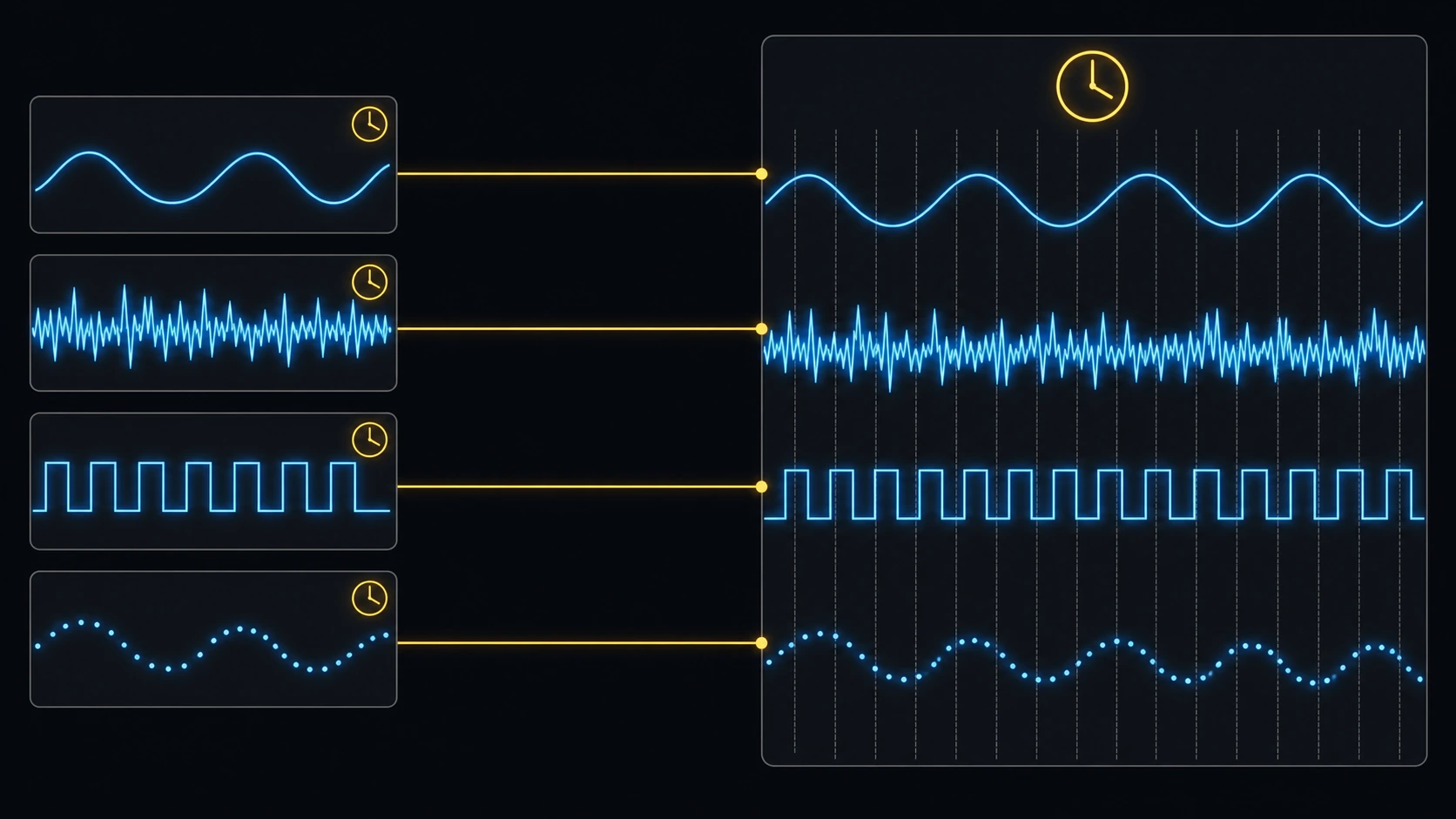
It is worth noting that selected advanced EEG systems offered by Interlab, such as APEX EEG and Axon-Rsystems, feature native LSL protocol integration included out of the box. As a result, bringing full EEG recording into the AcqKnowledge environment does not require developing custom software bridges.
4. Spatial conditions and station geometry
Physical room layout is determined by the specific research question. A station with a screen-based eye tracker poses different requirements than a mobile study requiring eye-tracking glasses.
Screen-based station specifics
- Working distance: Tobii Pro Spectrum requires maintaining a distance of 55–75 cm from the eyes; Tobii Pro Spark tolerates a range of 45–95 cm.
- Desk geometry: Desk depth must account for the monitor, mounted eye tracker, and the participant’s head distance without forcing an unnatural posture.
- Lighting: No direct sunlight falling on the participant’s face or the tracker sensor (IR LED interference). Window reflection suppression.
- Postural stability: A non-swivel chair or one with motion locks is required to prevent drifting after calibration.
Mobile station specifics
- Freedom of movement: Studies using Tobii Pro Glasses 3 and wireless BIOPAC BioNomadix modules.
- Scene camera and lighting: Eliminating strong environmental IR light sources (e.g., industrial heat lamps) that interfere with the scene lens.
- Power supply and mobility: Tobii Pro Glasses 3 battery runtime is up to 105 minutes. A battery swap plan is required for all-day sessions.
- Calibration loop: The necessity of establishing a calibration point in physical space prior to entering the study route.

5. Pipeline expansion and measurement architecture simulator
Expanding the pipeline from a single signal (e.g., gaze alone) to a multimodal setup increases research value but also raises operational burden. The ladder below presents the logical progression of participant preparation complexity.
Sequence for adding modalities to the measurement pipeline
Each step increases sensor placement setup time and the risk of motion artifacts.
Screen-based or wearable eye tracking
Recording gaze fixation point and pupil diameter. Contactless or single-point calibration.
+ Galvanic Skin Response Activity (EDA / GSR)
Two measurement sites on the hand/fingers. Marker of autonomic nervous system arousal.
+ Electrocardiography (ECG) and Respiration Belt
Recording sinus heart rate variability (HRV) and respiration pattern.
+ Electromyography (EMG)
Measurement of facial micro-expressions (e.g., m. zygomaticus major, m. corrugator supercilii).
+ Electroencephalography (EEG) / fNIRS
Multi-channel cap with gel or hemodynamic optodes. Highest preparation requirements.
Interactive AcqKnowledge Architecture Simulator
Configure the measurement pipeline for a behavioral station. View MP200 channel usage, signal flow, and required licenses.
Total throughput: 300 kHz (MP200 Max: 1600 kHz). Scaling over LAN.
Signal travels via cable directly to modules in the MP200 unit.
Device handled directly within AcqKnowledge, bypassing analog channels.
Receiving streams from external devices in real time.
AcqKnowledge Pipeline Complexity and Licensing Calculator
Select the elements you plan to combine in your new laboratory:
Required software licenses
Base AcqKnowledge license
Synchronization method in AcqKnowledge
Native MP200 acquisition (Autosync on START button)
Note: The ACK100-LSL and STIM-PRES-ACK100-LIC licenses are separate paid add-ons to AcqKnowledge software.
6. Research session workflow and data lifecycle
An efficient measurement pipeline relies on a repeatable workflow executed by operators. A multimodal experiment does not forgive skipped control steps. The standard protocol includes:
- Checking mains noise (50 Hz) on MP200 physiological channels in AcqKnowledge.
- Cleansing EDA/ECG electrode attachment sites with isopropanol or conductive gel.
- Performing eye tracker calibration (Tobii Pro Lab or built-in module) and evaluating gaze accuracy in degrees of visual angle.
- Verifying visibility of event markers (triggers) in the recording preview.
- Starting recording in AcqKnowledge — ensuring all connected streams start simultaneously.
Personal and video data pose a distinct organizational challenge. Utilizing wearable eye-tracking glasses with a scene camera involves capturing images of third parties. GDPR guidelines require a clear anonymization protocol, a dedicated server for storing raw recordings, and a data retention schedule following grant completion.
7. Eight execution mistakes and pipeline acceptance checklist
Summarizing findings from research equipment deployments in academic institutions, we have identified the eight most common mistakes made during the laboratory design phase:
Buying separate systems from 4 manufacturers without considering data fusion in AcqKnowledge or LSL.
Overlooking that Presentation Designer and LSL require separate, paid add-on licenses.
Purchasing a desk that is too shallow, placing the participant closer than the minimum working distance (e.g., < 55 cm dla Spectrum).
Positioning the station directly facing south windows without blackout blinds, interfering with IR illuminators.
Starting actual testing with participants without prior verification of trigger latency in the recording.
Conducting the first recording session on a paid participant instead of a research team member.
Deploying a full suite of EEG, physiology, and eye tracking simultaneously from day one, overwhelming the operator with signal noise.
Lacking consent forms for recording bystander imagery from scene cameras on eye-tracking glasses in natural environments.
Laboratory station technical acceptance checklist
Before signing off on equipment handover and launching the experiment, verify the following points:
Summary: Configure your measurement pipeline with Interlab
Building a behavioral laboratory does not have to involve months of struggling with hardware incompatibilities. Utilizing AcqKnowledge software and the BIOPAC MP200 unit as the central acquisition hub guarantees immediate recognition of connected hardware, automatic synchronization, and seamless analytics data export.
BIOPAC MP200
16-channel physiological data acquisition unit with sampling up to 100 kHz/channel and LAN interface.
Tobii Pro Spectrum
Highest-precision screen-based eye tracker for scientific research combining eye tracking with EEG and physiology.
Consultation and Pipeline Assembly
Our engineers will help select the appropriate AcqKnowledge licenses (LSL, Presentation Designer) for your grant.
Planning to build or modernize a laboratory?
Share your research objectives and planned signal list with us. We will prepare a complete measurement pipeline concept based on BIOPAC MP200, AcqKnowledge, and Tobii, with full synchronization integration guaranteed.
Sources and manufacturer technical documentation
- BIOPAC Systems, Inc. — MP200 Data Acquisition System Specifications (16 analog channels, 100 kHz/chan, LAN scaling).
- BIOPAC Systems, Inc. — LSL License for AcqKnowledge (ACK100-LSL Add-On) (AcqKnowledge v5.0.10+, Win/macOS; access to streams from other devices — AcqKnowledge does not share its data via LSL, NDT is used for that).
- BIOPAC Systems, Inc. — Eye Tracking Integration License (ACK100W-EYE) (native integration of EyeTech, Tobii and EyeLogic screen-based eye trackers; requires Windows; includes Stimulus Presentation).
- BIOPAC Systems, Inc. — Stimulus Presentation License for AcqKnowledge (STIM-PRES-ACK100-LIC Add-On) (Presentation Designer, automated markers, MP200/MP160/MP36R support).
- Tobii AB — Tobii Pro Spectrum Hardware Specifications & Working Distance.
- Tobii AB — Tobii Pro Glasses 3 Wearable Eye Tracker Integration Guide.