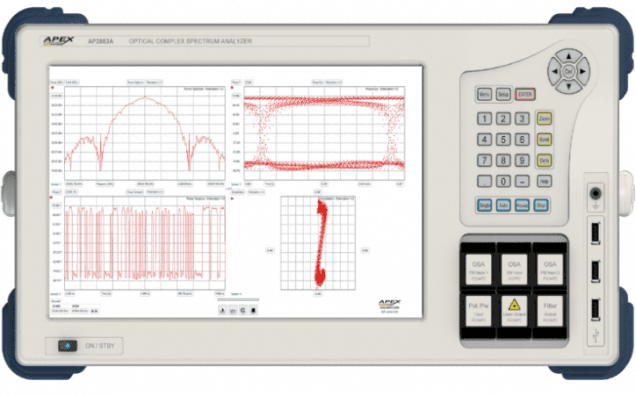
APEX’s optical complex Spectrum analyzer
Since 2001, APEX Technologies has focused on developing and manufacturing innovative, very high-performance test devices intended for fiber optic telecommunications testing. Since the introduction of the world’s first commercially available ultra-high-resolution optical spectrum analyzer, APEX Technologies has also been dedicated to the continuous development of the optical measurement field. Our experience makes us aware that innovation never ends, which is why we follow the policy „knowledge is power”.

  • Innovative, very high-performance test devices
  • The world’s first ultra-high-resolution optical spectrum analyzer
  • Measurement of optical phase as a function of frequency
  • Up to 500x better spectral resolution
  • Up to 50x better throughput of the optical modulation analyzer

Principle of Operation

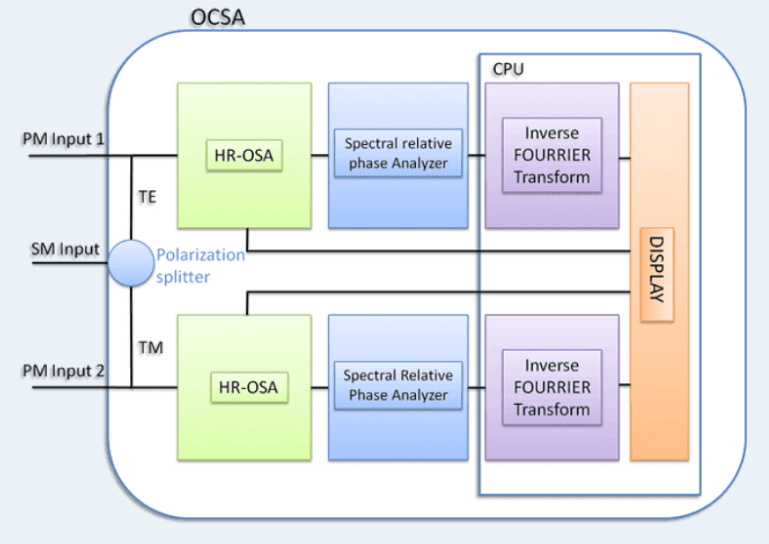
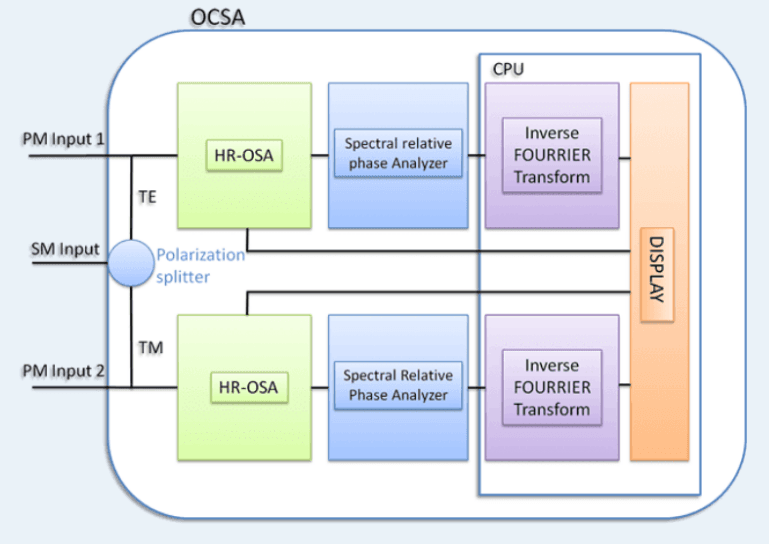
APEX Technologies Optical Complex Spectrum Analyzers are high-resolution optical spectrum analyzers with the added benefit of measuring optical phase as a function of frequency. Thanks to spectral power and spectral phase information, it is possible, using the inverse Fourier transform, to calculate and display time-domain parameters, such as an optical modulation analyzer.

Use it as an ultra-high-performance optical spectrum analyzer

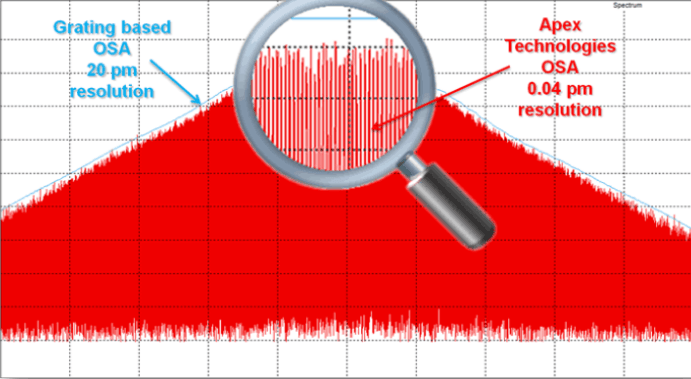
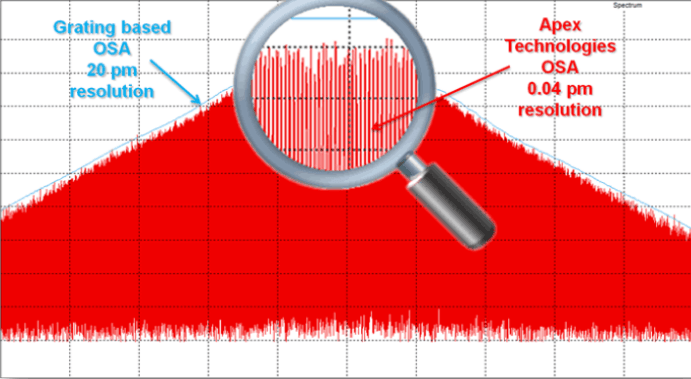
Thanks to up to 500 times better spectral resolution than the best commercially available optical spectrum analyzer based on a standard grating, the integrated optical spectrum analyzer can display the actual shape of the signal spectrum, and not just its envelope.

Key features of the optical spectrum analyzer:

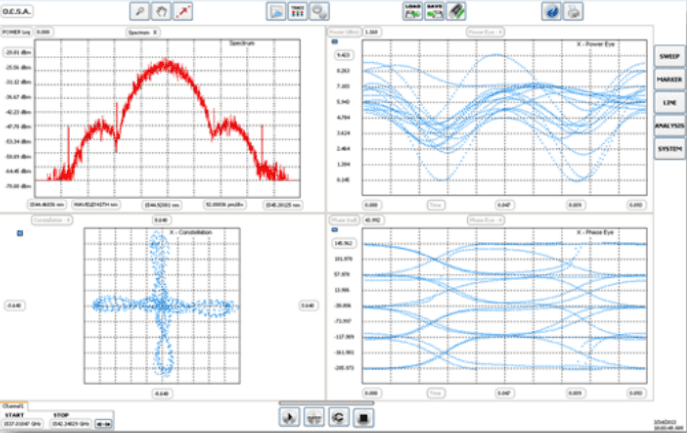
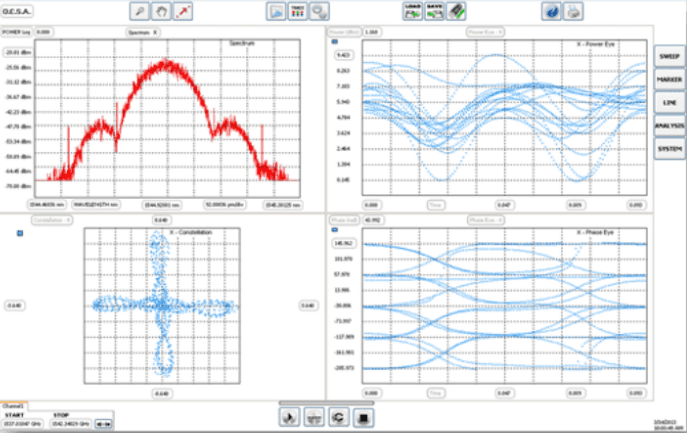
Use it as an ultra-high-performance optical modulation analyzer

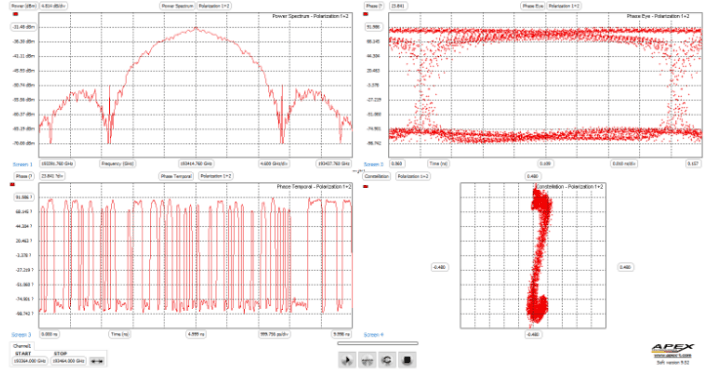
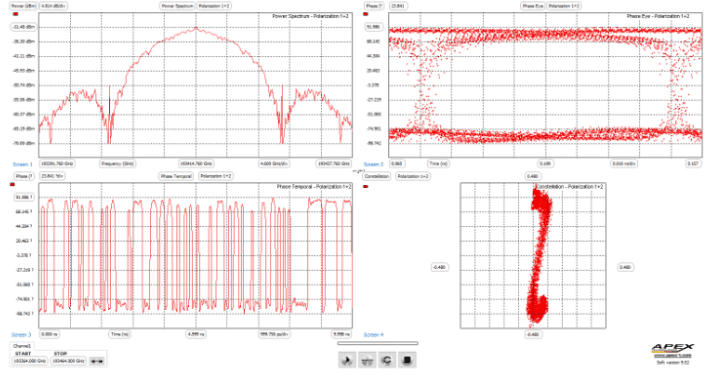
With up to 50 times better throughput than the best time-domain optical modulation analyzer on the market, the integrated optical modulation analyzer can measure any current and future symbol-rate signal with far more detail than all competitors.

Key features of the optical modulation analyzer:

PRBS Pattern Analysis

APEX Technologies Optical Complex Spectrum Analyzers need a repetitive pattern to perform a complex measurement and cannot do so with a real signal. All lengths of repetitive patterns are not accepted by the optical complex spectrum analyzers, and the accepted lengths depend on the symbol rate of the tested signal.
The transmission rate of the tested signal divided by the pattern length must fall within the pattern frequency range (from 70 MHz to 1 GHz).
The equipment has no upper limit on transmission rate and can measure any modulation format.

Complex measurement configuration

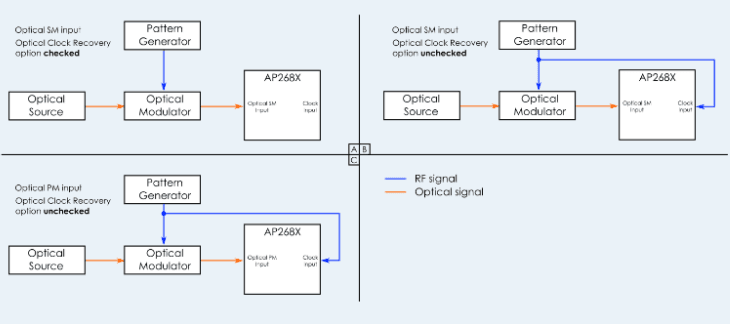
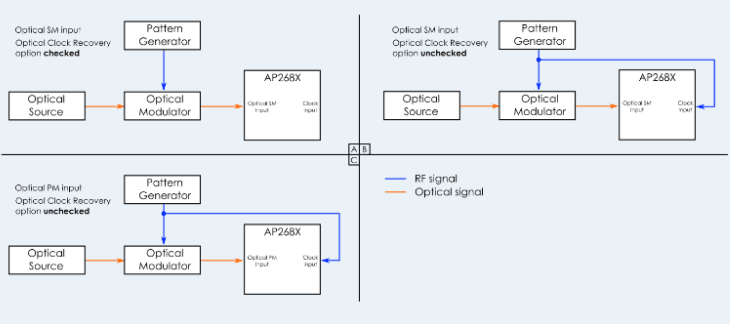
As mentioned, a complex measurement requires not only intensity but also phase as a function of frequency. To measure phase, the tested signal must be a repetitive signal with a pattern frequency from 70 MHz to 900 MHz. Commercially available PPGs and AWGs are able to generate an appropriate pattern length to match this pattern frequency range for any signal rate. A reference RF pattern clock repetition signal is also required. The user can manually connect an external clock to the device. To simplify configuration, a new optical clock recovery function is available, which allows complex measurements to be performed without a reference clock signal.
Download materials click to expand

???? OSA_OCSA_datasheet

Interested in this product?

Contact us for a detailed quote and technical advice.

Related products

Meters & Fusion SplicersOptical Spectrum Analyzers (OSA)OSAPhotonics & R&D

Meters & Fusion SplicersOptical Spectrum Analyzers (OSA)OSAPhotonics & R&D

Meters & Fusion SplicersOptical Spectrum Analyzers (OSA)OSAPhotonics & R&D

Ask about this product

Product: APEX’s optical complex Spectrum analyzer