Specialty Fibers

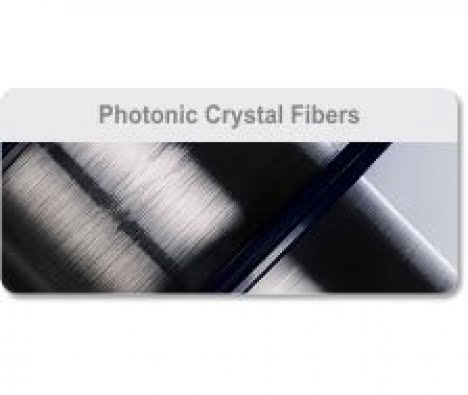
A broad range of NKT Photonics microstructured fibers: LMA, ytterbium-doped, hollow-core, and polarization-maintaining fibers.

  • Broad range of microstructured fibers
  • LMA, ytterbium-doped
  • Hollow-core type
  • Polarization-maintaining fibers

An overview of specialty fibers from the Interlab offering, based on the photonic crystal fiber (PCF) technology from NKT Photonics. The microstructure of air channels running along the entire fiber makes it possible to tailor dispersion, mode field, and numerical aperture within a range unattainable for conventional doped optical fibers. The portfolio includes nonlinear fibers for supercontinuum generation, passive large mode area (LMA) fibers, double-clad active ytterbium-doped fibers for high-power lasers and amplifiers, and hollow-core fibers guiding light in an air core. Most items are available in terminated lengths (including FC/PC, SMA) or spliced to pigtails made of standard fibers.

Applications

  • Supercontinuum generation and nonlinear wavelength conversion
  • Fiber lasers and high-power ultrafast pulse amplifiers
  • Beam delivery of ultrashort pulses without nonlinear effects
  • Interferometry, optical metrology, and fiber-optic sensors
  • Scientific research in nonlinear photonics and quantum technologies

Key parameters

ParameterValue
Fiber familyCharacteristics and typical application
Nonlinear PCF fibersTailored dispersion profile and high nonlinearity coefficient; supercontinuum generation, wavelength conversion
LMA (large mode area) fibersSingle-mode large mode field fibers, passive and polarization-maintaining (PM) versions; beam transport and shaping
Active Yb double-clad fibers (aeroGAIN)Double-clad ytterbium-doped fibers with large single-mode cores; high-power pulsed lasers and amplifiers
Hollow-core fibersLight guiding in an air core; transmission of ultrashort pulses without nonlinear effects, bend resistance
Polarization-maintaining (PM) fibersStable polarization state in interferometric, sensing, and laser systems
Termination and connectorizationLengths terminated with FC/PC or SMA connectors, splicing to pigtails made of standard fibers

Why microstructured fibers?

In a photonic fiber, the waveguide properties are defined by the geometry of the microstructure, not solely by the glass doping profile. This enables designs unavailable for conventional fibers: single-mode fibers across a very broad spectral range, large mode field cores that preserve beam quality at high powers, and hollow-core fibers in which light propagates in air — with minimal interaction with the material, which limits nonlinearities and the risk of damage during the transmission of high peak power pulses. The choice of a specific fiber type depends on the wavelength, power, and dispersion requirements of the system — we invite you to consult our engineers.

Fluoride fibers (ZBLAN, AlF3) for the mid-infrared range are presented on a separate product page.

Interlab is an authorized distributor — we provide technical consulting, implementation support, and service. Ask for a quote.

Download materials click to expand

Interested in this product?

Contact us for a detailed quote and technical advice.

Related products

FBG AnalysisFBG InterrogatorsMonitoring SystemsPhotonics & R&D

Passive Fiber Optic ComponentsPhotonics & R&D

Meters & Fusion SplicersOptical Spectrum Analyzers (OSA)OSAPhotonics & R&D

Meters & Fusion SplicersOptical Spectrum Analyzers (OSA)OSAPhotonics & R&D

Ask about this product

Product: Specialty Fibers