LIGHTEL WDM / CWDM / DWDM Multiplexers
LIGHTEL wavelength multiplexers: fused (Fused WDM), filter-based (Filter WDM), CWDM and DWDM. Pump and signal multiplexing, OTDR/service channels, 4–40 channel mux/demux, 100/200 GHz spacing. Discrete housings, cassettes, LGX, rack.

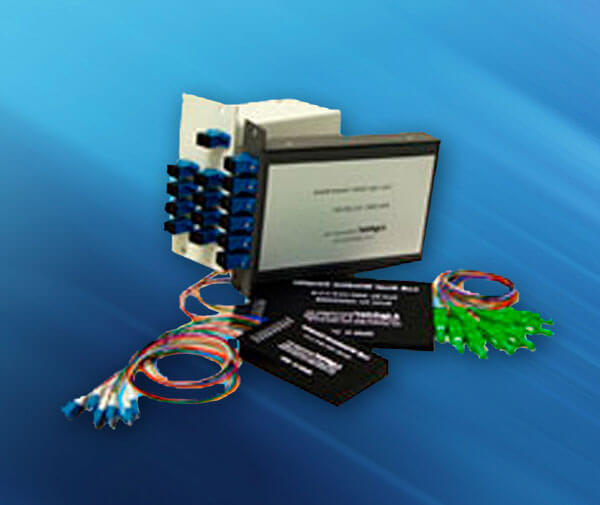
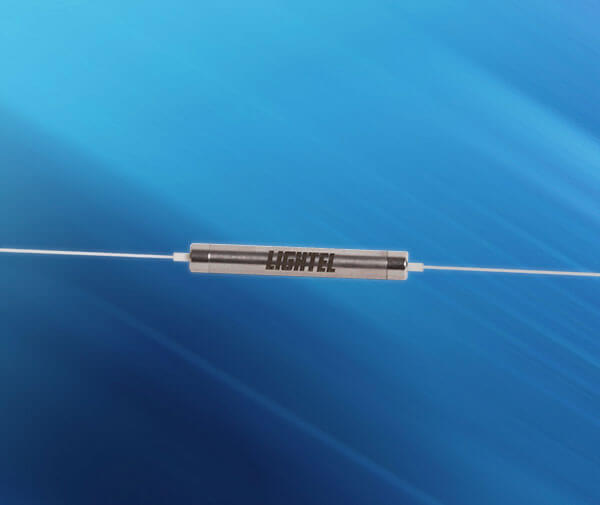
LIGHTEL WDM, CWDM and DWDM wavelength multiplexers combine and separate signals of different wavelengths in a single fiber, allowing the capacity of existing fiber infrastructure to be increased many times over. The offering includes fused multiplexers (Fused WDM), filter-based multiplexers (Filter WDM), CWDM and DWDM.

These are solutions for carrier networks, optical amplifiers (pump and signal multiplexing), PON/NG-PON systems and OTDR monitoring. Available in discrete housings, cassettes, LGX modules and rack units, with LC, SC and MPO connectorization.

Variants offered

  • Fused WDM: 1480/1550, 1310/1550, 1060/1550, 980/1550, 980/1060, 980/1030, 630/1060 nm, 2 µm and PM versions
  • Filter WDM: Pump/Signal, 1310/1550 (also High Isolation), 1310+1490/1550, C-Band/L-Band, Red/Blue Pass, L-Band service channel, 1064 nm bandpass filter
  • CWDM: single Add/Drop and Extended Band, 4/8/16-channel mux/demux, compact CCWDM 4–18 channels
  • DWDM: compact modules, Add/Drop 100/200 GHz (also PM), 4/8/16/32/40-channel mux/demux

Typical parameters — CWDM Mux/Demux

Parameter 4 channels 8 channels
Wavelength range 1460–1620 nm (20 nm spacing)
Insertion loss (band) ≤ 1.6 dB ≤ 2.7 dB
Adjacent channel isolation (demux) ≥ 35 dB
Directivity ≥ 55 dB
Return loss (RL) ≥ 45 dB
PDL ≤ 0.15 dB
Max. power 300 mW

Typical parameters — Fused WDM 1310/1550 nm

Parameter Premium A Grade
Band 1310 ± 15 nm / 1550 ± 15 nm
Insertion loss (IL) ≤ 0.3 dB ≤ 0.5 dB
Isolation ≥ 17 dB ≥ 15 dB
Return loss (RL) ≥ 55 dB

Values without connectors, Corning SMF-28e fiber. Higher specifications available on request.

Applications

  • Increasing carrier network capacity (wavelength multiplexing)
  • EDFA amplifiers — pump and signal multiplexing (980/1550, 1480/1550)
  • PON / NG-PON access networks and overlaying an OTDR / service channel
  • High-capacity DWDM systems (100/200 GHz)

Frequently asked questions

What is the difference between CWDM and DWDM?
CWDM uses a wide 20 nm spacing (1271–1611 nm) and cheaper, uncooled sources — an economical way to increase capacity. DWDM packs many channels into a narrow 100/200 GHz spacing in the C/L band, offering much greater capacity for backbone networks.

Can an OTDR or service channel be integrated?
Yes — we offer Filter WDM for overlaying an OTDR channel and an L-Band service channel, enabling link monitoring without interrupting transmission.

What housings are available?
Discrete devices, cassettes, LGX modules, trays and rack units; LC/SC/MPO connectorization.

Ordering information and configuration

All LIGHTEL passive components are made to order and configured to the application requirements. When submitting an inquiry, please specify: wavelength range, fiber type, required parameters (insertion loss, isolation, PDL), connector type (LC / SC / FC / MPO or unconnectorized pigtail) and housing / packaging type. Price is quoted individually — use the “Request a quote” button.

INTERLAB is the authorized LIGHTEL distributor in Poland — we provide technical advice, component selection and after-sales support.

See also: lasers for photonics and R&D, fiber splicing and processing, other LIGHTEL products (connector inspection).

Download materials click to expand

Datasheet — CWDM Mux/Demux (EN)

Datasheet — Fused WDM 1310/1550 (EN)

Brochure — passive components / telecom (EN)

Interested in this product?

Contact us for a detailed quote and technical advice.

Related products

FBG AnalysisFBG InterrogatorsMonitoring SystemsPhotonics & R&D

FBG AnalysisFBG InterrogatorsMonitoring SystemsPhotonics & R&D

Ask about this product

Product: LIGHTEL WDM / CWDM / DWDM Multiplexers