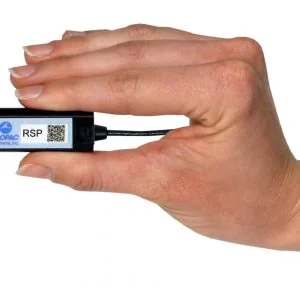
Wired respiration amplifier (BIOPAC RSP100D)

A wired respiration amplifier from the BIOPAC Smart Amplifier series — measurement electronics placed directly at the respiration transducer reduce interference and motion artifacts, and acquisition parameters configure automatically in AcqKnowledge. Requires the AMI100D interface and an MP160 or MP200 unit (not MP150), plus AcqKnowledge 5.0.4 or newer.

BIOPAC Smart Amplifier · Respiration Measurement (RSP)

RSP100D is an amplifier from the Smart Amplifier series — measurement electronics placed directly at the respiration transducer, instead of in a module near the acquisition unit.

Thanks to the transducer's close location, the signal is less susceptible to electromagnetic interference (EMI) and motion artifacts, and acquisition parameters configure automatically in AcqKnowledge upon connection.

Part of a larger system

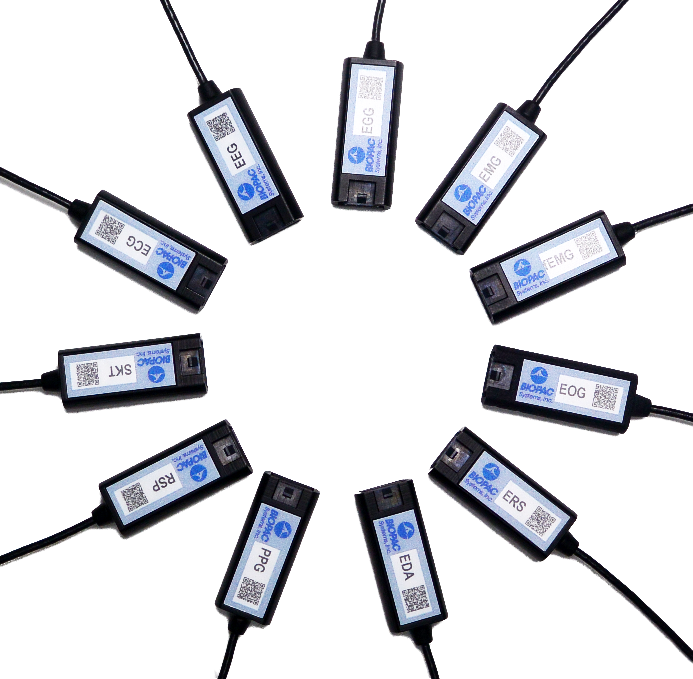
BIOPAC Smart Amplifier 100D module family — illustrative photo of the entire line (RSP100D is one of the modules in this family)

Illustrative photo of the entire Smart Amplifier 100D family — the RSP100D module has an identical housing.

RSP100D is an expansion module, not a standalone system

The RSP100D module itself does not record or store data on its own. It requires connection via the AMI100D interface to an MP160 or MP200 data acquisition unit (Smart Amplifier modules do NOT work with MP150) together with AcqKnowledge software version 5.0.4 or later.

In addition, RSP100D requires a separately ordered respiration transducer with an elastic belt — details in the section below. The module connects via a 3 m RJ12 cable to the AMI100D interface, and the recorded signal is placed on a shared, synchronized timeline together with other modules in the system.

Required respiration transducer

RSP100D is just the amplifier — measurement requires a separately ordered respiration transducer with an elastic belt.

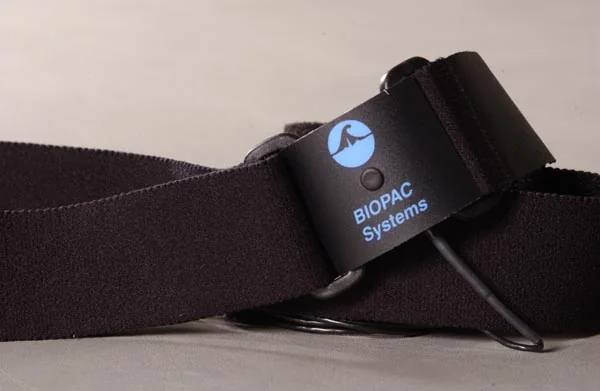
BN-RESP-XDCR respiration transducer belt Manufacturer photo (BIOPAC) — elastic belt of the BN-RESP-XDCR respiration transducer. BN-RESP-XDCR

Respiration transducer with elastic belt

A dedicated transducer combining an elastic belt with the RSP100D module — worn around the chest or abdomen, depending on the study protocol.

  • Elastic belt — worn around the chest (thoracic breathing) or abdomen (diaphragmatic/abdominal breathing)
  • Elastic construction adapts to different subject body sizes
  • Transducer dedicated to RSP100D — connects to the module via RJ12 cable

Key features

Electronics close to the transducer

The Smart Amplifier architecture places the amplifier right next to the respiration transducer — significantly reducing EMI interference and motion artifacts compared with a traditional module located at the acquisition unit.

Automatic configuration

Upon connection, the module automatically configures acquisition parameters in AcqKnowledge — no manual switch settings required.

Automatic respiration rate calculation

AcqKnowledge computes a derived signal — respiration rate — and flags it as normal or elevated, without manual waveform analysis.

Belt for chest or abdomen

The elastic BN-RESP-XDCR belt is worn around the chest or abdomen — the choice depends on the study protocol (thoracic vs. diaphragmatic breathing).

DC–10 Hzmeasurement bandwidth
0.05–1 HzHP/LP filters
MP160/200compatibility (via AMI100D)
BN-RESP-XDCRrequired transducer

Full technical specification

Signal
Respiration — signal from the respiratory transducer belt
HP filter
0.05 Hz
LP filter
1 Hz
Bandwidth (wideband)
DC – 10 Hz
Derived signal
Respiration rate — calculated automatically in AcqKnowledge, flagged as normal or elevated
Output range
±10 V
CMRR
Min. 120 dB
Required transducer
BN-RESP-XDCR — transducer with elastic belt (chest or abdomen)
Module dimensions / weight
Approx. 1.8×4.6×1.1 cm, approx. 48 g (amplifier alone approx. 9 g)
Cable
3 m, RJ12, to the AMI100D interface
Compatibility
MP160 or MP200 (via AMI100D interface) + AcqKnowledge 5.0.4 or later

Where to place the measurement belt

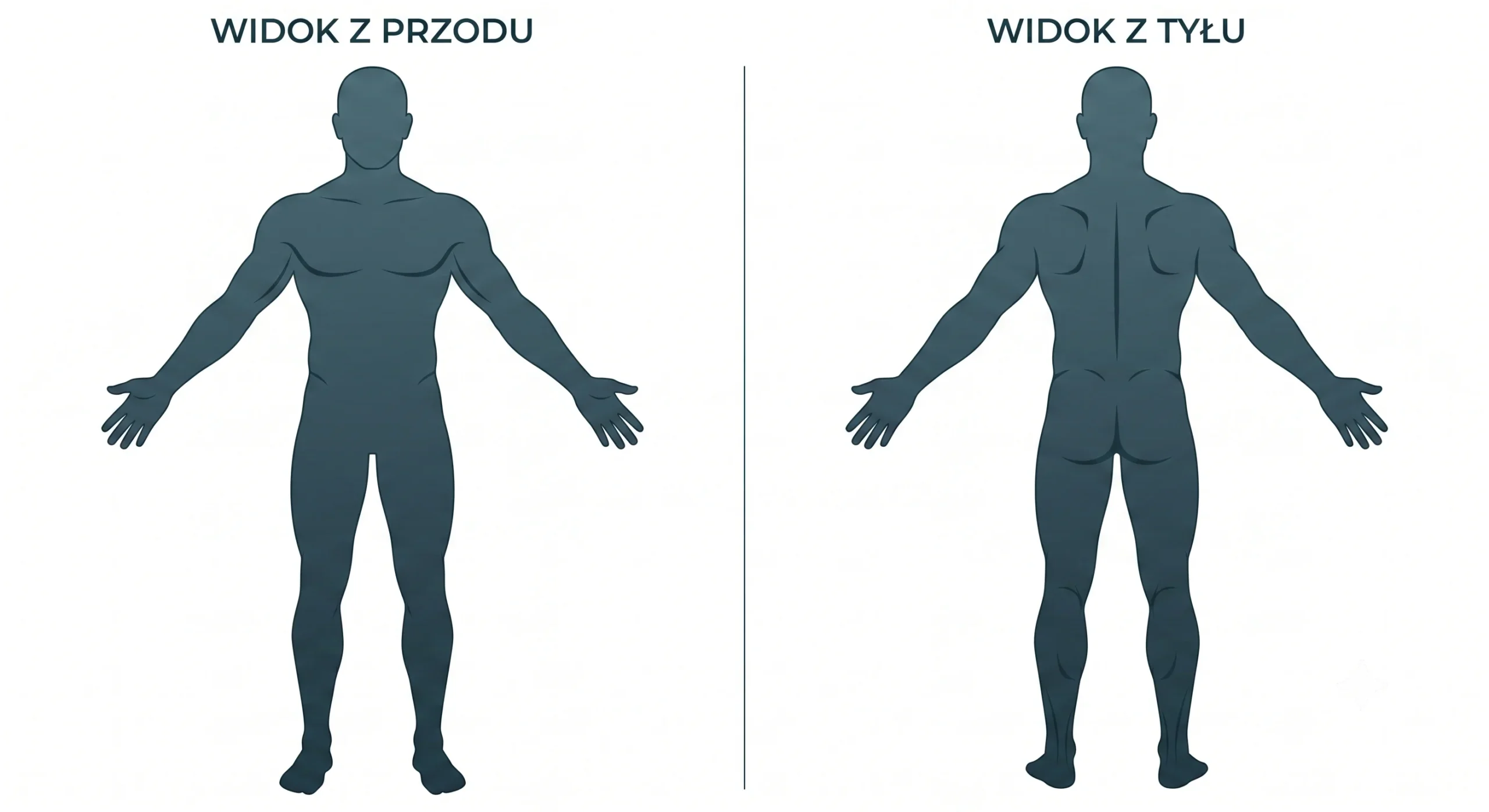
Click the points on the silhouette to see two belt placement variants for the BN-RESP-XDCR transducer — on the chest or on the abdomen.

The transducer belt is worn around the chest (for measuring thoracic breathing) or around the abdomen (for measuring diaphragmatic/abdominal breathing) — the choice depends on the study protocol adopted and which type of breathing is to be recorded. Illustrative diagram, based on generally accepted respiration measurement convention.

General body silhouette — front view, placement points for the respiration belt on the chest and on the abdomen

How it works

01

BN-RESP-XDCR belt on the subject

Elastic belt worn around the chest or abdomen, connected to the RSP100D module.

02

RSP100D + AMI100D + MP160/200

The module amplifies the signal right at the transducer and sends it via RJ12 cable to the AMI100D interface, and from there to the acquisition unit.

03

Analysis in AcqKnowledge

Automatic channel configuration, respiration rate calculation, and further analysis.

Experimental applications

Respiration measurement supports research on autonomic regulation, arousal, and physiological states.

Sleep and polysomnography

Recording breathing patterns in sleep studies and polysomnographic protocols.

Stress response research

Changes in respiration rate and depth as an indicator of response to experimental stressors.

UX and neuromarketing

Respiration as one of the arousal indicators in studies of reactions to materials and interfaces.

Exercise physiology

Monitoring respiration rate as one of the parameters in fitness and exertion studies.

Frequently asked questions

Download materials click to expand

Interested in this product?

Contact us for a detailed quote and technical advice.

Related products

Biometrics AccessoriesResearch & Scientific Instruments

fNIRSResearch & Scientific Instruments

AccessoriesEye TrackingResearch & Scientific Instruments

Eye TrackingResearch & Scientific InstrumentsStationary (Screen-based)

Ask about this product

Product: Wired respiration amplifier (BIOPAC RSP100D)