Field test instruments and fusion splicers for network installers and operators.
102 products in this department
Browse the departmentLaboratory instrumentation for photonics, laser technology and R&D.
226 products in this department
Browse the departmentFiber-optic sensing systems: DAS, DTS, DSS, FBG and OFDR.
84 products in this department
Browse the departmentEye tracking, fNIRS, EEG and biometrics for science and business.
35 products in this department
Browse the departmentHome » Products » Monitoring Systems » Power line monitoring
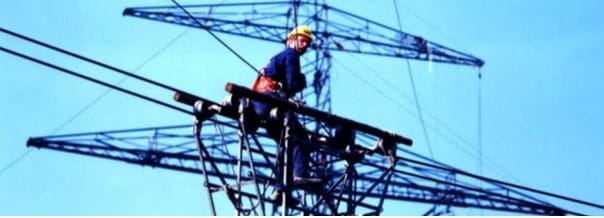
LUNA systems provide a complete real-time overview of transmission lines, including conductor behavior and line current. With a single system, the entire transmission network can be fully monitored, from transformers to overhead and underground lines.
With the growing demand for electricity and new renewable energy sources, managing power grids is becoming increasingly complex, and operators face higher uptime requirements and the difficult balancing of grid load. In densely populated areas, overhead transmission lines have limitations, and the likelihood of faults is high due to external factors. If temperature is monitored in real time, the capacity and reliability of power transmission can be increased, ensuring maximum capability and cost-effectiveness.
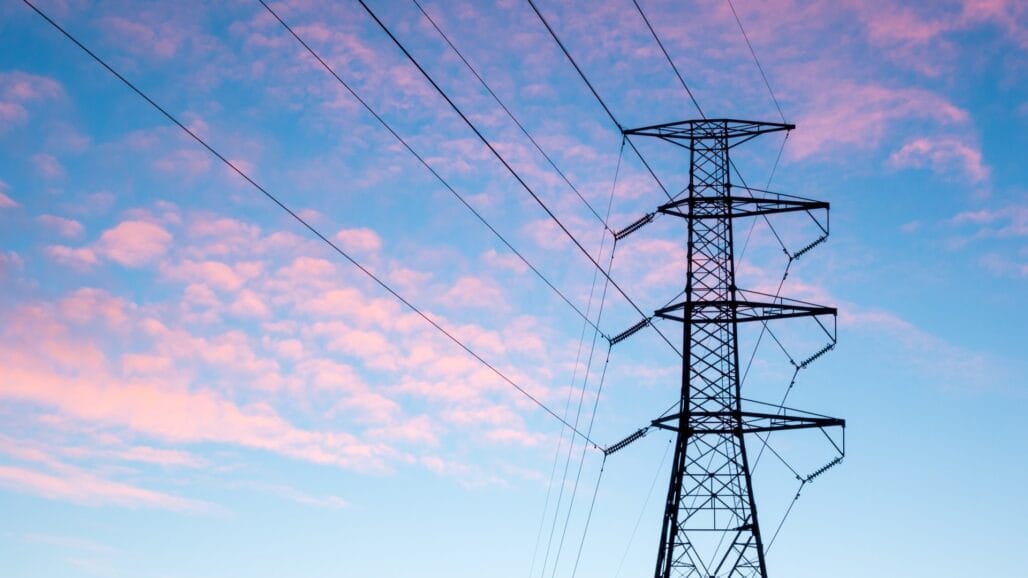
Operating power lines without violating safety regulations, material integrity, or grid reliability depends on the real-time rating of the transmission line. If a line is operated at or above its maximum temperature, the temperature rise will cause the line to sag and may lead to a violation of design clearances. Thanks to dynamic ratings and real-time monitoring, utilities and operators can develop and apply line ratings based on surrounding conditions, such as weather conditions, and thus achieve significantly more reliable and economical operation.
In the case of underground industrial installations, long power cables and other similar structures are susceptible to forces originating from many unforeseen factors – excavators digging a new road, an anchor dragged behind a boat, earthquakes, etc. Thanks to Luna’s tailored solution, infrastructure utilization can be optimized, maximizing the capacity of transmission paths. The data can be used to monitor the load of overhead lines, so that more energy can be transmitted while ensuring safety.
Based on passive optical fibers as temperature sensors integrated internally or mounted externally, the DTS (Distributed Temperature Sensing) solution provides state-of-the-art real-time temperature measurements. Once connected to an evaluation unit, the temperature profile is recorded and processed before being sent to standard interfaces to provide the operator with valuable operational information.
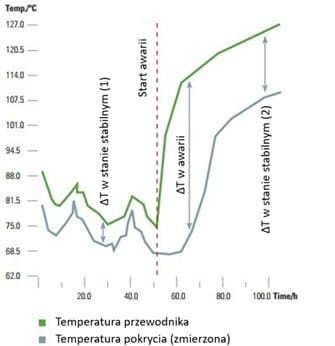
The built-in RTTR (Real-Time Thermal Rating) system calculates the current capacity under the given cable conditions and can provide continuous and automatic adjustment of calculation parameters, such as ambient temperature, thermal resistivity, etc. RTTR removes all the uncertainty left by DTS. While the temperature difference between the insulation and the conductor may be small in steady state, the temperature difference can increase significantly just a moment after an emergency situation occurs. Cable insulation has high thermal inertia. Unintended heating of the conductor may only be detected externally after several minutes or hours.
The LUNA DSTS (Distributed Strain and Temperature Sensing) system for power cables is a unique fiber optic strain and temperature measurement system designed for monitoring underground power cables and overhead transmission lines over large distances. The Long Range DSTS system continuously monitors and predicts cable load and core temperature over single sections up to 100 km long. The industry-leading 100 km range reduces installation cost and complexity, as fewer DSTS units are needed per installation. Thanks to an internal fiber optic switch, LUNA’s DSTS system can support up to 16 optical fibers, and consequently 16 separate power cables.
Related products
Product: Power line monitoring